
Amber Glass vs Clear Glass Bottles: Which Is Better for Skincare Packaging?

C. Final Article
The color of a glass bottle affects more than how a skincare product looks on a shelf. It can influence light exposure, formula stability, customer perception and the way a brand communicates product value.
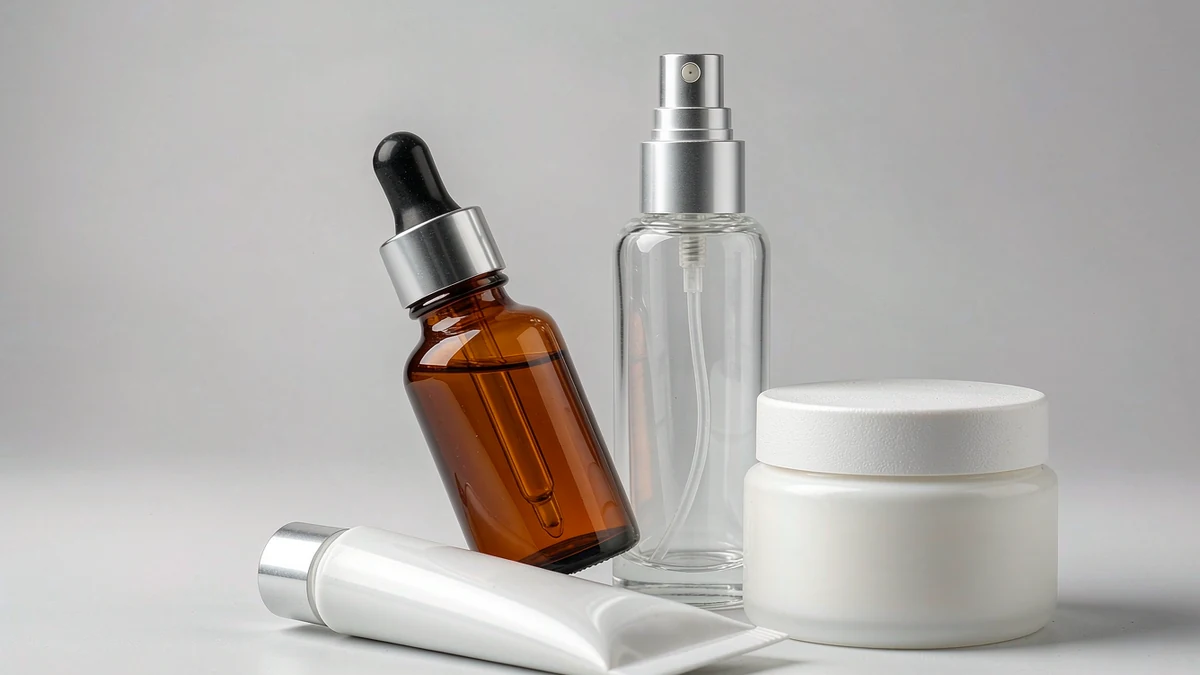
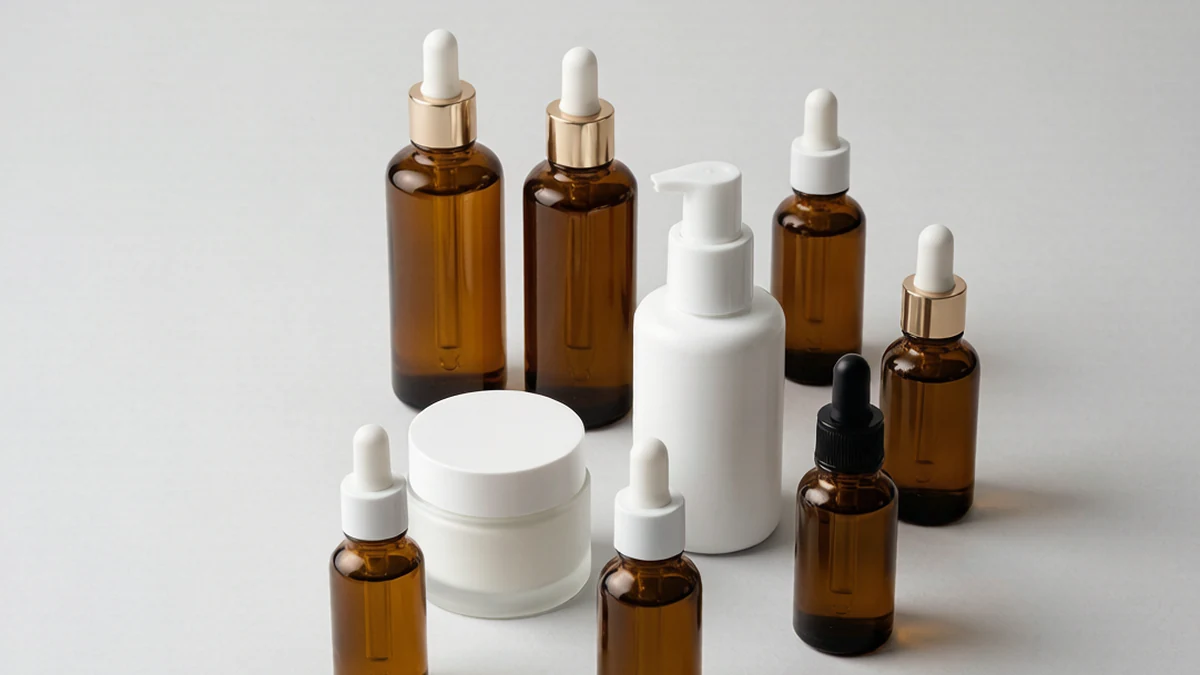
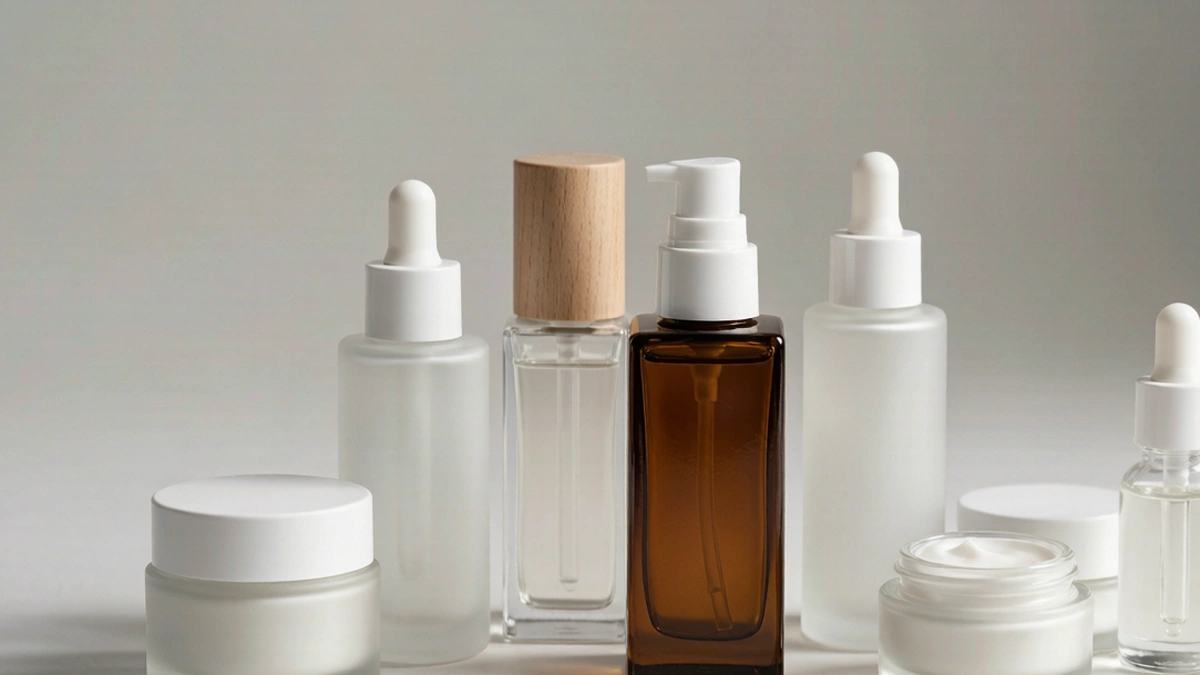
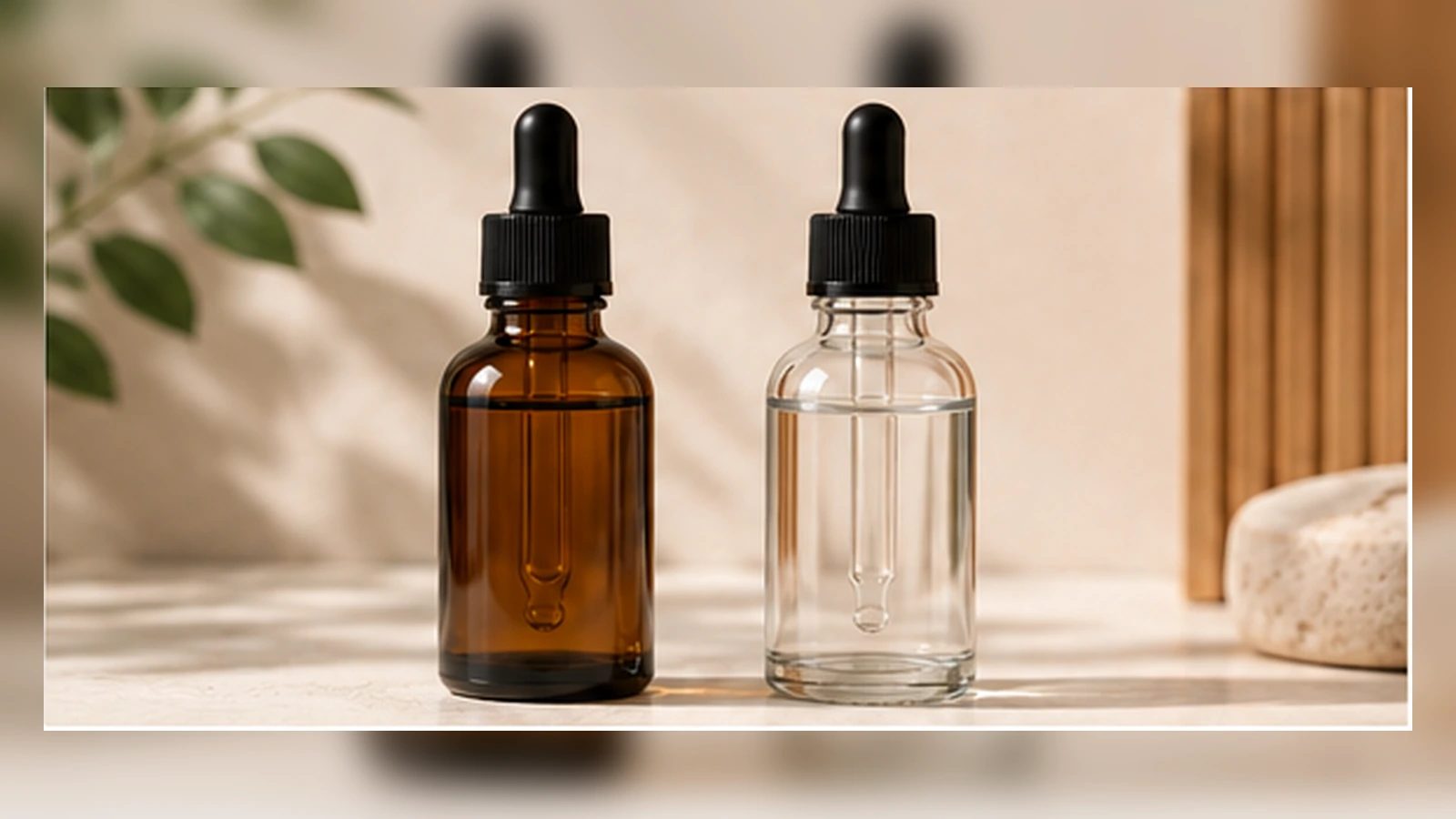
Amber glass is commonly selected when a formula contains light-sensitive ingredients or when product protection is a priority. Clear glass offers maximum visibility, making it useful when the color, texture or purity of the formula is part of the product story.
Neither option is automatically better for every skincare product.
The right choice depends on the formula, expected shelf and use conditions, bottle size, dispensing system, secondary packaging, brand positioning and the results of compatibility and stability testing.
If you are still deciding whether glass is the right material at all, start with Venturove’s guide to glass vs plastic cosmetic packaging. Once glass is confirmed, bottle color becomes the next important decision.
Amber Glass vs Clear Glass at a Glance
| Decision Factor | Amber Glass | Clear Glass |
|---|---|---|
| Light protection | Stronger protection against UV and short-wave visible light | Much higher light transmission |
| Formula visibility | Limited | Excellent |
| Best fit | Light-sensitive serums, essential oils and active formulas | Stable formulas where color or clarity is part of the presentation |
| Brand impression | Natural, apothecary, clinical or functional | Minimal, clean, modern or premium |
| Color-change visibility | Less obvious to the customer | Highly visible |
| Decoration flexibility | Good, but dark base changes print contrast | Excellent for printing, labels, coatings and visual effects |
| Main risk | Product color is less visible and the look may feel more traditional | Light-sensitive formulas may degrade faster without additional protection |
| Testing priority | Confirm actual light protection and complete-package compatibility | Confirm formula photostability and whether secondary light protection is needed |
This table is a starting point rather than a substitute for testing. Glass color, wall thickness, coating, closure design, storage conditions and formula chemistry can all affect real performance.
1. Why Light Matters in Skincare Packaging
Light can trigger chemical changes in cosmetic formulas.
Depending on the ingredient, exposure may contribute to photo-oxidation, photo-isomerization or direct photolysis. These reactions can reduce ingredient stability, alter color or odor, and change how the product performs over time.
Light-sensitive ingredients do not all respond in the same way. The final risk depends on the wavelength of light, exposure time, oxygen availability, temperature, formula composition and the packaging system.
Shorter wavelengths are generally more energetic. UVB, UVA and short-wave blue-violet light are therefore important when evaluating packaging for sensitive skincare formulas.
Amber glass is colored throughout the glass rather than simply appearing darker because of a surface finish. This coloration absorbs a large portion of shorter-wavelength light before it reaches the product.
Clear glass does the opposite: it is designed for visibility, so much more light reaches the formula.
For skincare brands, this creates a straightforward trade-off:
amber glass prioritizes protection, while clear glass prioritizes visibility.
2. How Much More Light Protection Does Amber Glass Provide?
The exact transmission level depends on glass composition, color depth, wall thickness and manufacturing consistency.
Technical data collected during the research for this article consistently show the same pattern: clear glass transmits far more UVA, UVB and short-wave visible light than amber glass, while amber glass substantially reduces transmission below approximately 450 nm.
That is why amber glass is widely used for light-sensitive pharmaceutical, essential-oil and skincare applications.
A useful reference point comes from USP spectral-transmission testing for light-resistant containers. For relevant non-injectable containers, the USP framework evaluates transmission across roughly 290–450 nm and applies strict maximum-transmission limits.
Cosmetic packaging is not automatically required to meet a pharmaceutical standard simply because it is amber. The practical lesson is different: when light protection matters, the buyer should verify the actual bottle rather than relying only on the words “amber,” “UV protection” or “dark glass.”
If the formula is highly sensitive, request packaging data or conduct photostability testing using production-equivalent samples.
3. When Amber Glass Is the Better Choice
Amber glass is usually the safer starting point when the formula contains ingredients that are known to be sensitive to light.
Vitamin C Serums
L-ascorbic acid is particularly vulnerable to oxidation and can show visible color change as degradation progresses.
A darker or light-reducing package is therefore commonly preferred for vitamin C formulas. Amber glass does not eliminate the need for good formulation, oxygen management or appropriate storage, but it can reduce one source of environmental exposure.
For a vitamin C serum sold in a dropper format, the brand should also consider how often the bottle is opened. Light protection and air exposure are separate issues.
Retinol and Retinoid Products
Retinol and related vitamin A ingredients are also sensitive to light and oxidation.
Amber glass may provide useful light protection, but the dispensing format still matters. Some active formulas may be better suited to opaque or air-reducing packaging systems depending on the formulation and stability results.
If dispensing-system selection is still open, compare the options in Venturove’s guide to dropper bottles vs pump bottles vs airless bottles.
Essential Oils and Botanical Oils
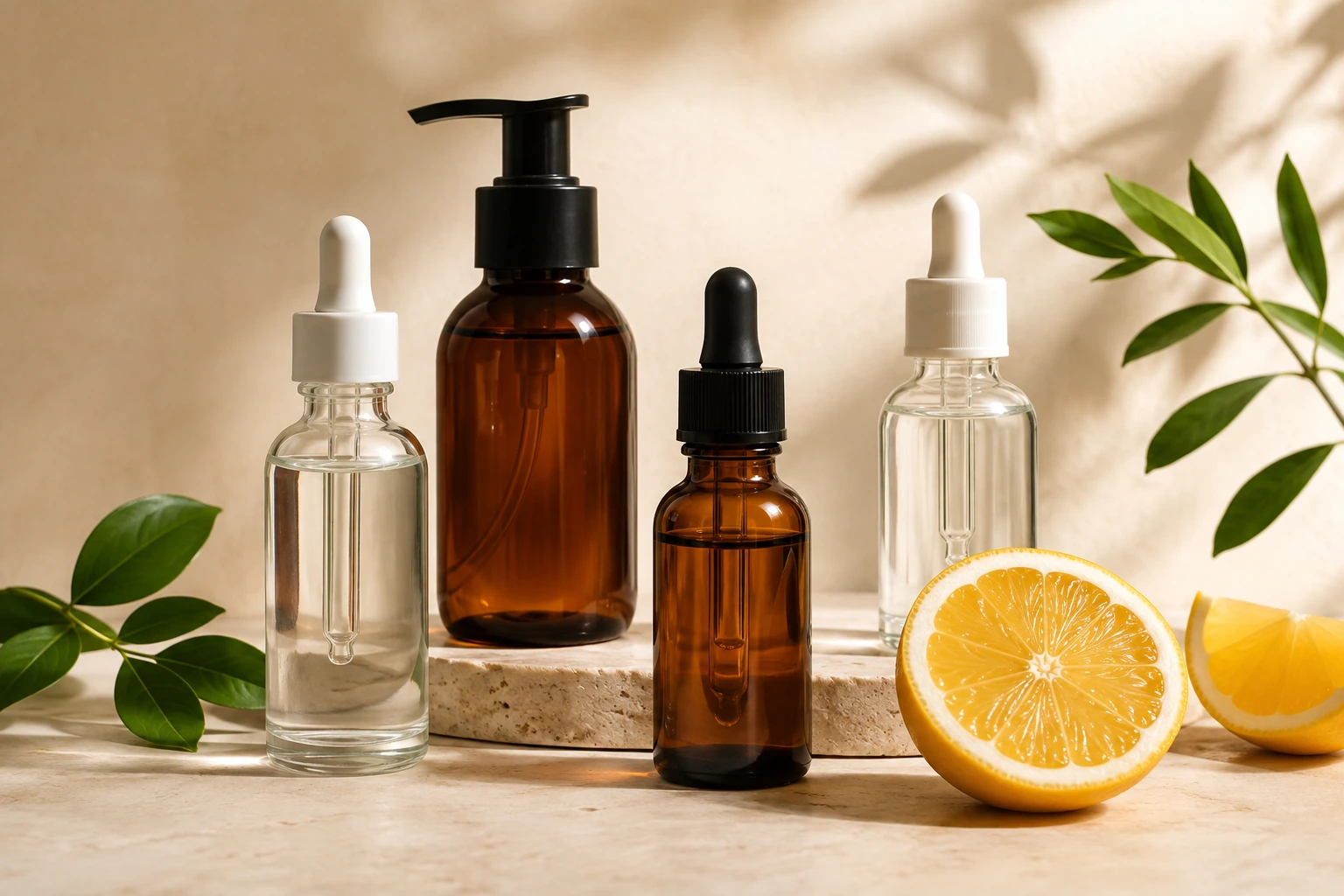
Essential oils, especially some citrus-rich formulas, can undergo photo-oxidation. Amber glass is therefore widely associated with essential-oil packaging.
The same logic may apply to facial oils containing oxidation-sensitive botanical extracts or active ingredients.
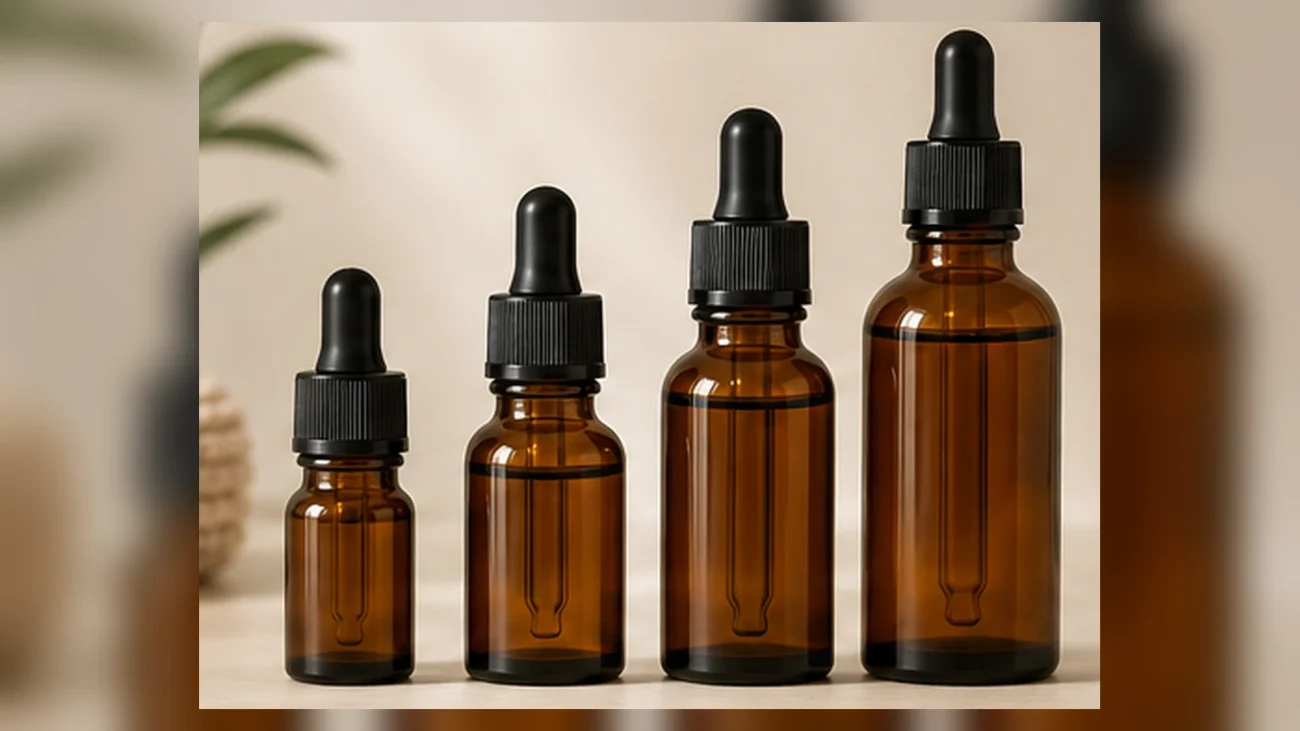
Venturove’s amber square essential-oil bottles provide an example of a multi-capacity amber glass format that can be paired with different dispensing concepts.
Active Serums
Not every serum needs amber glass, but formulas containing light-sensitive antioxidants, retinoids or certain botanical actives often justify stronger protection.
For a broader formula-based selection framework, see How to Choose Cosmetic Packaging for Serum Products.
4. When Clear Glass Can Be the Better Choice
Clear glass is not a poor packaging material. It is simply less protective against light.
For a stable formula, that may be perfectly acceptable.
Clear glass can be a strong choice when:
- the formula is demonstrated to be photostable under expected storage and use conditions;
- the product color is part of the brand story;
- the customer is expected to inspect product clarity or texture;
- a clean, minimal or laboratory-inspired appearance is important;
- secondary packaging provides additional light protection.
A transparent bottle can be especially effective for color-led formulas, premium oils, visually distinctive serums and products where purity or clarity is part of the positioning.
However, visibility also makes every change visible.
If the formula naturally changes slightly in color over time, a clear bottle can make that change more noticeable to customers. That does not automatically mean the product is unsafe, but it can affect perceived quality.
For clear packaging, the buyer should therefore think about both chemical stability and customer perception.
5. Amber, Clear or Frosted: Do Not Confuse Appearance With Protection
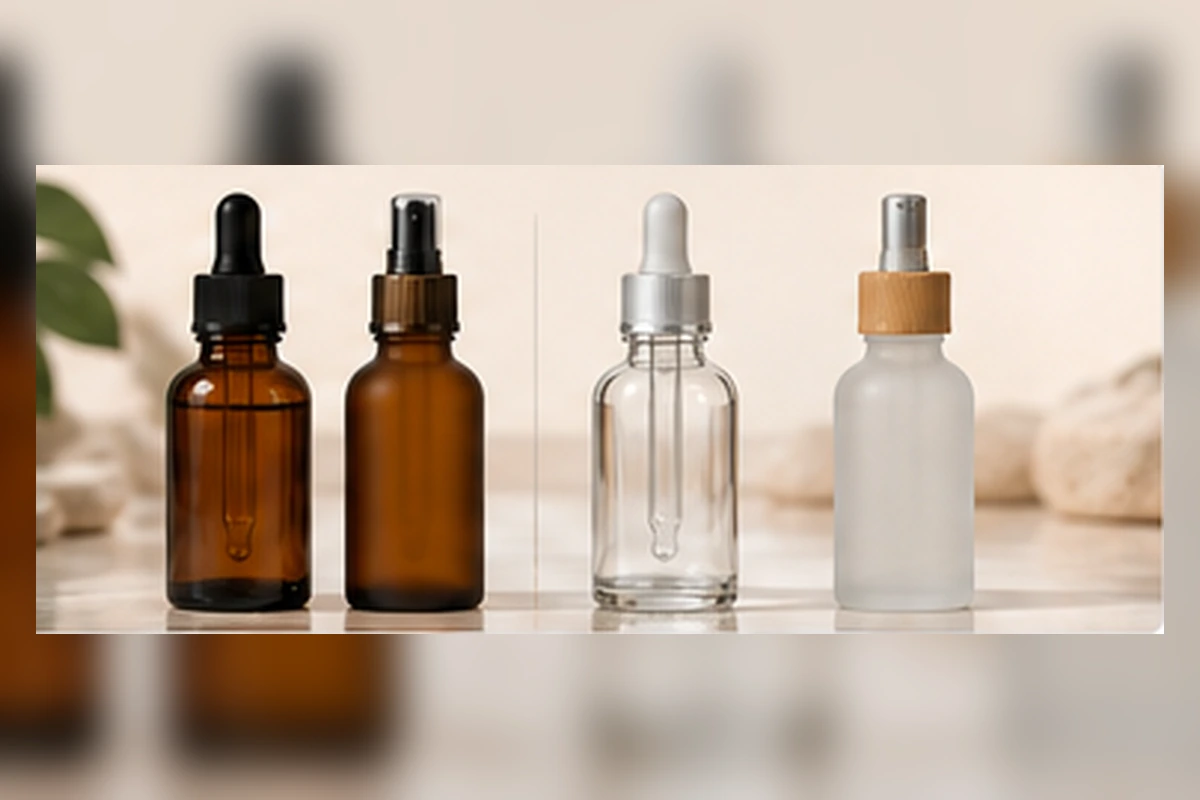
Frosted glass is often treated as a third option between amber and clear.
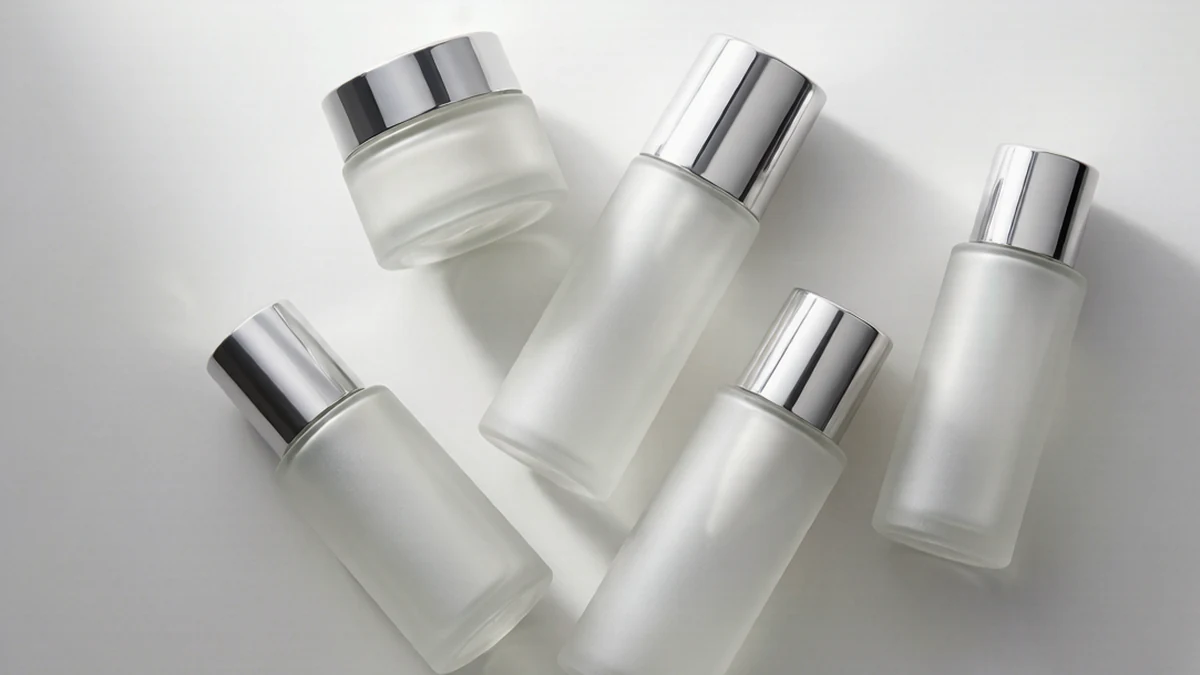
Visually, it can be very effective. Frosting can soften reflections, reduce fingerprints, improve grip and create a premium or spa-like appearance. It can also blur minor visual changes in the formula.
But frosting should not be treated as a substitute for amber glass.
The research sources reviewed for this article do not support the claim that ordinary frosted clear glass provides the same UV protection as amber glass. Some sources describe minor additional light diffusion, while others state that frosted clear glass provides little meaningful UV protection.
The safe conclusion is simple:
choose frosted glass primarily for appearance and tactile experience, not as the main light-protection strategy.
If a brand wants a frosted look and strong protection, consider a frosted amber base, an opaque coating, a protective carton or another verified light-blocking solution.
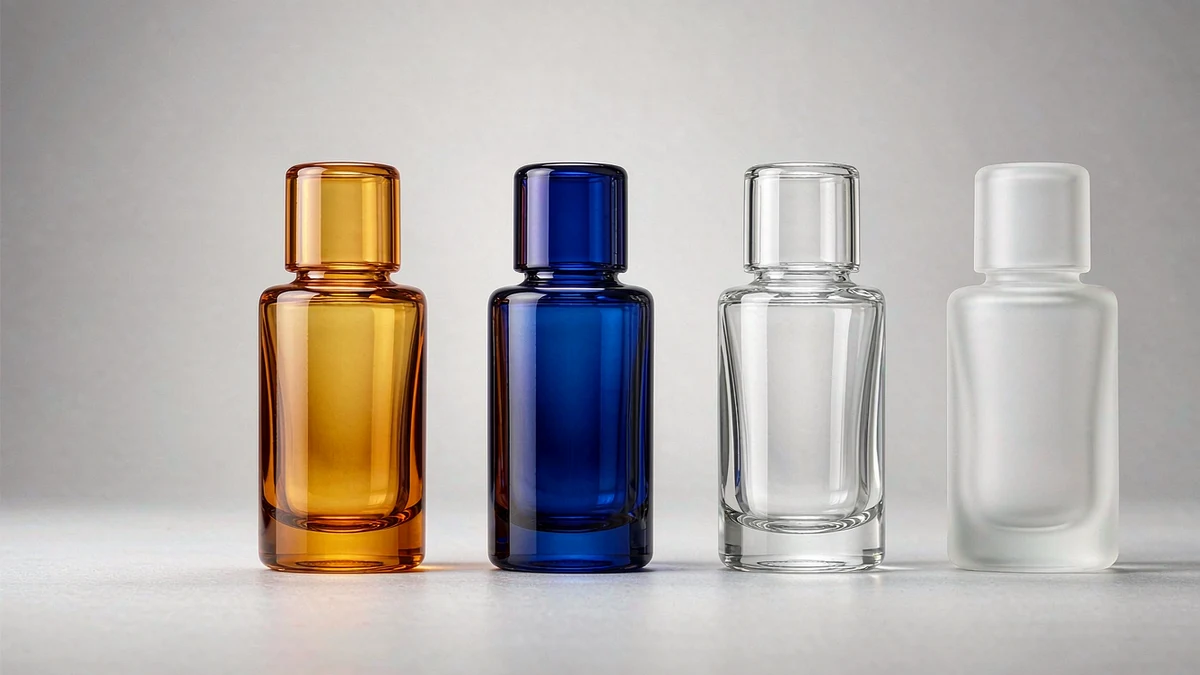
Venturove’s 30ml round glass dropper bottle page shows amber, clear and frosted finishes within the same product family, making it useful for comparing how the visual position changes while the bottle format remains similar.
6. What If the Brand Wants Clear Glass for a Light-Sensitive Formula?
Sometimes the formula suggests amber packaging while the brand identity strongly favors clear glass.
In that case, the solution should be designed as a complete packaging system rather than forcing one bottle to do everything.
Possible strategies include an opaque or dark secondary carton, a validated light-blocking coating, a large opaque label area, or a different dispensing package.
The important word is validated.
A coating may look dark without providing the required spectral protection. A decorative finish may also scratch, peel or behave differently after transport and filling.
If light protection is a critical product requirement, test the finished package rather than assuming that a coating, label or frosted surface is sufficient.
For some products, an opaque metal package can also be considered. Venturove’s aluminum bottles with dropper caps provide an alternative when product visibility is less important than an opaque package.
7. Bottle Color Should Match Bottle Size
Light protection and capacity should be considered together.
A large bottle may remain open for much longer than a small bottle. That means the formula may experience a longer period of routine light, oxygen and temperature exposure before the customer finishes it.
For a sensitive formula used only in small amounts, moving from 15ml to 50ml can change the stability challenge even if the glass color stays the same.
This is why bottle capacity should be selected from expected use rather than from shelf appearance alone.
Venturove’s guide to 10ml, 15ml, 30ml and 50ml dropper bottle sizes explains how capacity affects product positioning, use rate and packaging decisions.
8. Check the Glass, Not Just the Color Name
Two amber bottles can look similar while performing differently.
The final light protection can be influenced by:
- glass composition;
- wall thickness;
- color depth and consistency;
- whether the color is integral to the glass or applied as a coating;
- bottle geometry;
- manufacturing variation.
For B2B procurement, the specification should therefore go beyond “amber glass bottle.”
Where light protection is important, ask for the relevant technical specification or test data for the actual production bottle. A decorative sample or catalog photograph cannot prove spectral performance.
The same principle applies to clear glass. If a formula is expected to remain stable in transparent packaging, that assumption should be supported by finished-product stability testing.
9. Neck Finish and Closure Compatibility Still Matter
Bottle color cannot compensate for a poor closure system.
A dropper, pump or screw cap must match the exact neck finish. Similar nominal diameters are not automatically interchangeable, and small differences in thread specification can affect sealing and transport performance.
For multi-capacity platforms, confirm:
- the complete neck-finish specification;
- closure thread compatibility;
- pipette or dip-tube length;
- gasket or liner material;
- bulb or elastomer compatibility;
- torque and sealing performance;
- leakage after inversion, vibration and temperature change.
Venturove’s 5ml–100ml 18mm glass bottle platform includes multiple colors and capacities. That page is supplied as Bottle Only / Closure Not Included, so the compatible closure must be selected separately.
For oils and aggressive aromatic ingredients, elastomer and liner compatibility should be tested with the real formula rather than assumed from an empty package.
10. Brand Positioning: Protection vs Visibility
Packaging communicates before the customer opens the product.
Amber Glass
Amber glass often creates a natural, functional, apothecary or professional impression. It can support ingredient-focused products, essential oils, botanical formulas and active skincare.
Its main branding limitation is that the customer sees less of the formula itself.
Clear Glass
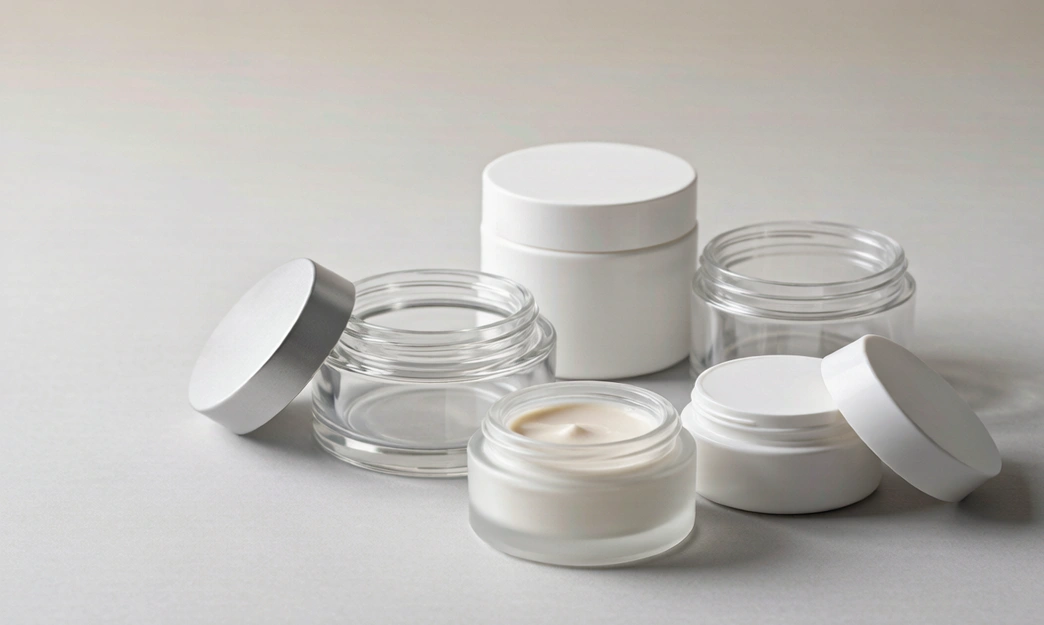
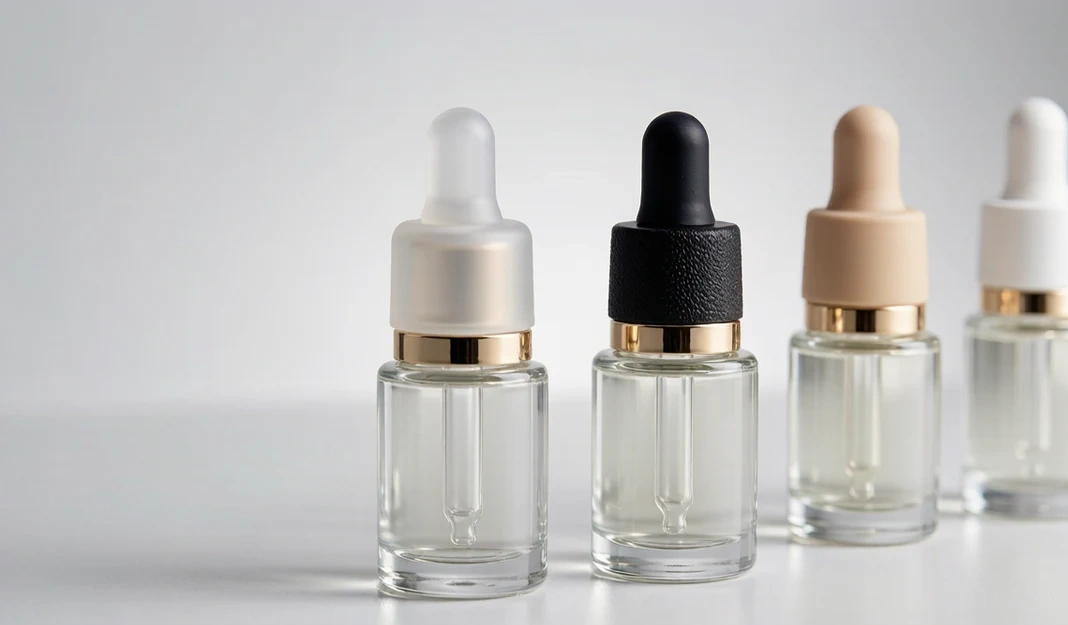
Clear glass can feel clean, modern, premium and minimal. It works especially well when formula color, clarity or suspended visual elements are part of the presentation.
Its weakness is that both the formula and any visible color change are exposed to the customer.
Frosted Glass
Frosted glass can soften the appearance of the package and add tactile value. It is useful when the brand wants a more luxurious visual effect while reducing direct visual emphasis on the liquid.
The protection strategy should still be determined separately.
For brands building a broader packaging system, Venturove’s guide to choosing the right cosmetic packaging provides a useful starting framework.
11. Decoration and Secondary Packaging
The bottle base color is only one part of the final design.
Common decoration options include screen printing, hot stamping, labels, coatings and frosted finishes. Each changes the way the bottle looks and may affect production complexity, durability and cost.
A clear bottle offers maximum flexibility for visual effects because the product remains visible behind the decoration.
Amber glass creates stronger contrast with white, metallic and light-colored decoration but may alter how printed colors appear.
Before approving decoration, test the real production finish for:
- adhesion;
- scratch resistance;
- compatibility with alcohol or oils if relevant;
- color consistency;
- readability;
- resistance to filling and transport handling.
If a secondary carton is part of the light-protection strategy, test the bottle and carton as one system.
12. B2B Buyer Checklist
Before confirming amber or clear glass, verify:
- Is the formula light-sensitive?
- Which wavelengths are relevant to the stability risk?
- Does the formula contain vitamin C, retinol, essential oils or other sensitive actives?
- Has the formula been tested in the actual package?
- Is product visibility important to the brand?
- Does the customer need to see color or fill level?
- Is frosted glass being used for appearance rather than assumed protection?
- Does the bottle use integral colored glass or a surface coating?
- Is the wall thickness and color consistency acceptable?
- Is the full neck-finish specification confirmed?
- Are the closure, liner, bulb and pipette compatible with the formula?
- Has the finished package passed leakage and transport testing?
- Does bottle capacity match the expected use period?
- Is secondary packaging required for additional light protection?
- Has the final decorated package been reviewed for both performance and brand presentation?
Final Recommendation
Choose amber glass when protecting a light-sensitive formula is more important than showing the product clearly.
Choose clear glass when the formula is stable enough for transparent packaging and product visibility is an important part of the brand experience.
Choose frosted glass for visual and tactile positioning, but do not rely on frosting alone as the primary UV-protection method.
For sensitive skincare formulas, the final decision should be based on the complete package: bottle color, glass composition, capacity, closure, dispensing system, secondary packaging and stability testing.
The strongest packaging choice is not the darkest bottle or the clearest bottle. It is the one that protects the formula while supporting the way the product is sold and used.
Need Help Comparing Amber and Clear Glass Packaging?
Share your formula type, target capacity, preferred finish and closure requirements with Venturove. We can help you compare suitable glass packaging options for your project.
FAQ
Is amber glass always better than clear glass for skincare?
No. Amber glass is generally the better choice when light protection is important, while clear glass can be suitable for stable formulas where product visibility supports the brand. The final decision should be based on stability testing.
Does clear glass block UV light?
Clear glass provides much less protection against UVA, UVB and short-wave visible light than amber glass. Exact transmission depends on glass composition and thickness, so sensitive formulas should be tested in the real package.
Is frosted glass UV protective?
Frosted clear glass should not be treated as equivalent to amber glass for UV protection. Frosting is primarily a visual and tactile finish. If stronger light protection is required, use an appropriate colored or opaque base, validated coating or secondary carton.
Is amber glass better for vitamin C serum?
Amber or other light-reducing packaging is commonly preferred for light-sensitive vitamin C formulas. However, oxidation can also be affected by oxygen, temperature and formulation, so bottle color alone does not guarantee stability.
Can retinol be packaged in clear glass?
It is possible only if the complete formulation and packaging system demonstrate adequate stability. Because retinol is light-sensitive, darker, opaque or otherwise protective packaging is usually a safer starting point.
Can amber and clear bottles use the same dropper?
Only if the bottle neck finish, thread specification, closure, pipette length and sealing components are compatible. Color alone does not determine closure compatibility.
Should I choose amber or clear glass for facial oil?
It depends on the oil and any added active ingredients. A stable oil may work in clear glass when visibility is important, while formulas containing light-sensitive botanical extracts, vitamin C derivatives or retinoids may benefit from amber or more opaque packaging.