
Cosmetic Packaging Compatibility Testing: How to Test Bottles, Pumps and Formulas Before Production

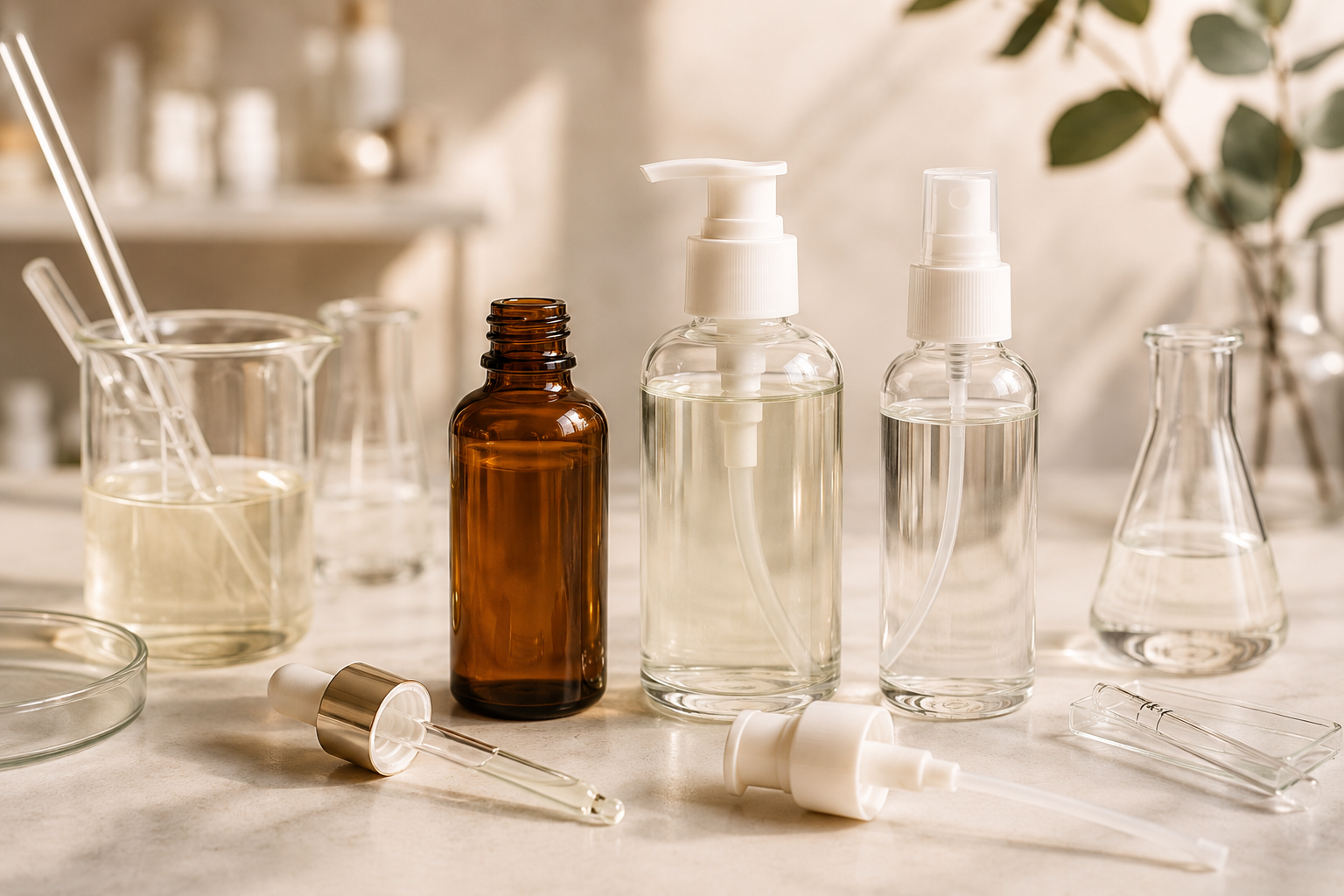
Choosing a bottle is only the beginning.
A package can look right, fit the brand and even perform perfectly when empty, yet still fail once it is filled with the actual formula. A serum may soften a gasket. An essential-oil blend may cause stress cracking in certain plastics. An acidic formula can attack exposed metal components. A pump that performs well with water may struggle with a viscous lotion.
That is why packaging compatibility testing should happen before full production, not after finished goods are already packed.
For cosmetic brands and B2B buyers, the real question is not simply:
“Does this pump fit this bottle?”
It is:
“Will this complete packaging system still seal, dispense and protect this exact formula after storage, transport and repeated use?”
The answer has to come from testing the final formula in the actual bottle, closure and dispensing components intended for production.
1. Why Empty-Bottle Testing Is Not Enough
A cosmetic package is a system rather than a single component.
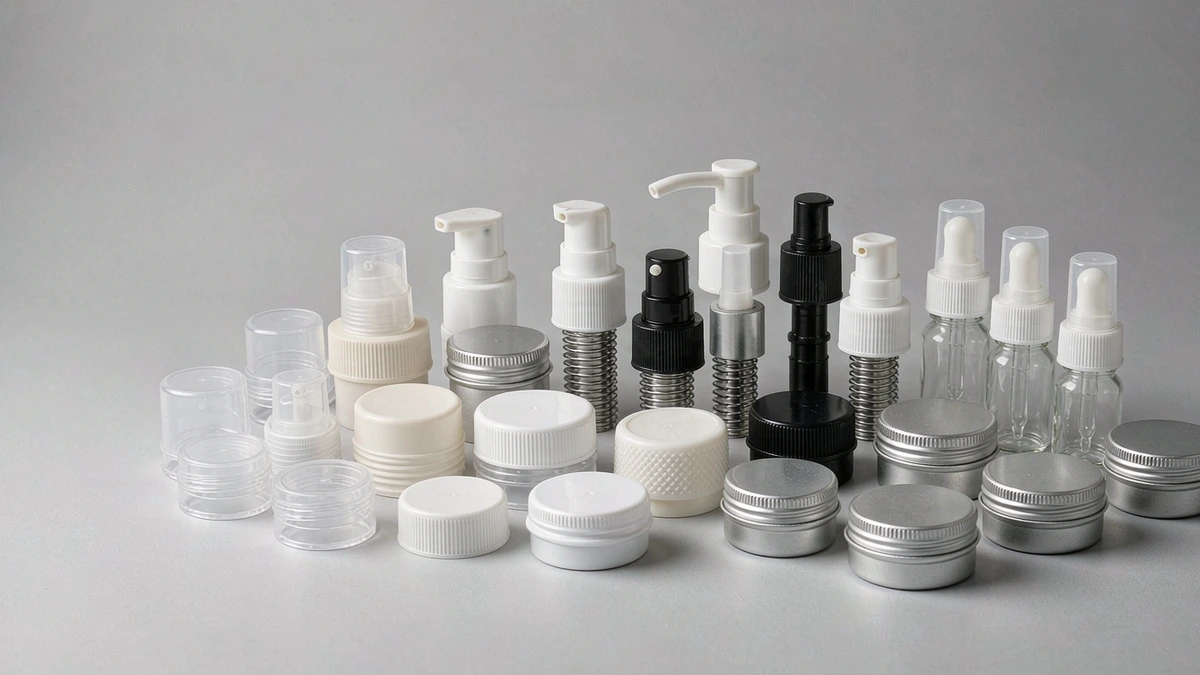
Depending on the format, the formula may contact:
- the bottle wall,
- pump or sprayer components,
- a dip tube,
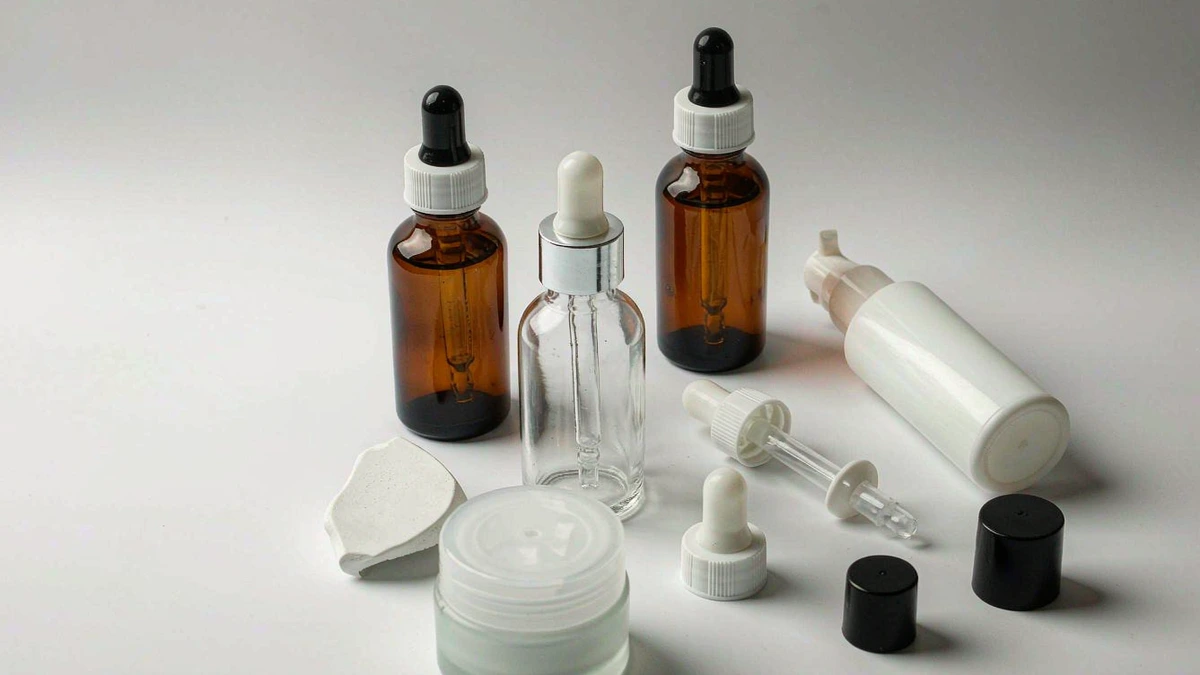
- a dropper pipette,
- a rubber or silicone bulb,
- a gasket,
- a liner,
- a metal spring,
- and the closure itself.
Each of these materials can react differently with alcohol, oils, acids, fragrances, active ingredients or surfactants.
This is why filling a sample bottle with water can answer only a limited question. It may show whether the bottle obviously leaks, but it cannot reproduce the chemistry of the finished product.
A real formula may cause swelling, discoloration, corrosion, adsorption, stress cracking or changes in dispensing performance that water never reveals.
For buyers who are still comparing materials, our guide to glass vs plastic cosmetic packaging provides the basic material differences. Compatibility testing is the next step: proving that the material choice works with the actual product.
2. Start With the Formula, Not the Bottle
Compatibility testing becomes much more useful when the packaging team understands what makes the formula difficult to package.
A simple water-based toner and a high-alcohol spray may use similar-looking bottles but create very different risks.
The same applies to an oil serum, a vitamin C formula and an AHA treatment.
Alcohol-Based Formulas
High-alcohol formulas require particular attention to plastics, elastomers and liners.
Some plastics can become more vulnerable to environmental stress cracking under solvent exposure. Rubber components may also swell or lose mechanical performance.
Glass, PP and HDPE are often considered for alcohol-containing products, but the complete closure system still requires testing. A chemically resistant bottle does not help if the gasket or pump component fails.
Essential Oils and Fragranced Oils
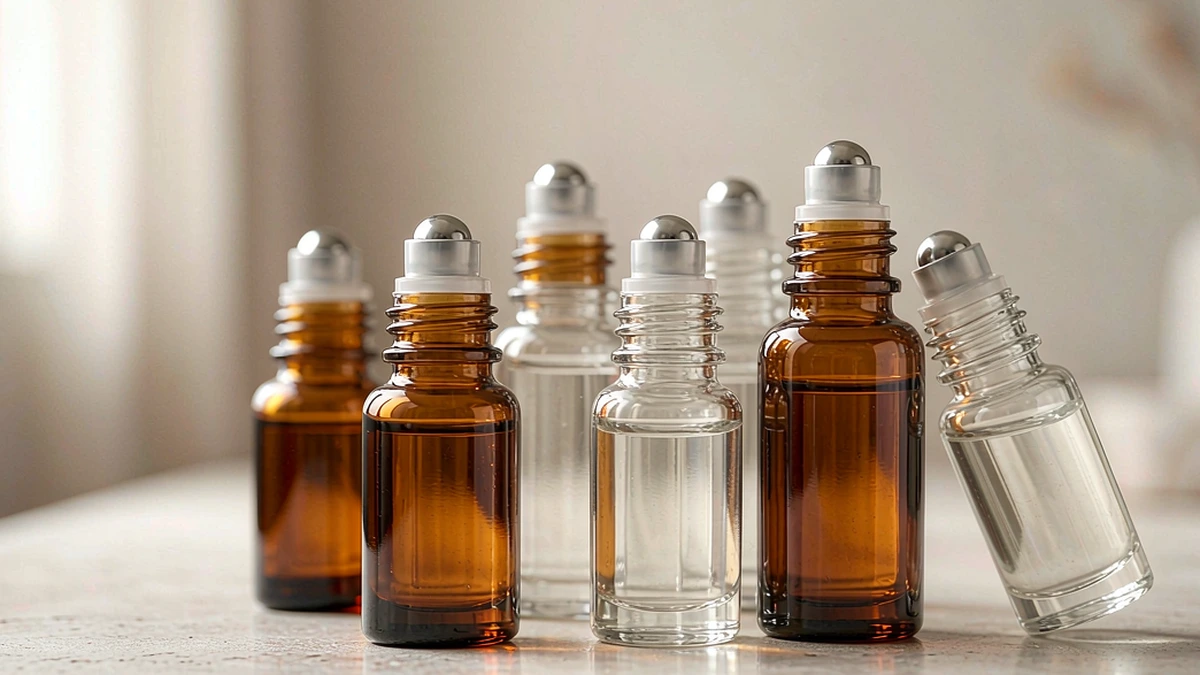
Essential oils, especially terpene-rich oils, can be aggressive toward some plastics and elastomers.
This makes the bottle material only part of the decision. The bulb on a dropper, the gasket inside a cap and the dip tube in a pump may all need separate attention.
Glass is often chosen for concentrated oils because of its chemical inertness, but closure compatibility still needs to be demonstrated with the final formula.
Acidic Formulas
Low-pH products such as AHA or BHA treatments can create corrosion risks when exposed to unsuitable metal components.
The bottle itself may remain perfectly stable while an internal spring, exposed aluminum component or incompatible liner becomes the failure point.
This is one reason buyers should ask suppliers about the materials used inside the dispensing system rather than evaluating only the visible bottle.
Vitamin C and Retinol
With oxidation- and light-sensitive formulas, chemical compatibility is only one part of the packaging question.
Light exposure, oxygen ingress and repeated opening can also influence product stability.
Amber, opaque or air-restricting formats may therefore be considered alongside formula stability work.
For a closer look at light protection, see Amber Glass vs Clear Glass Bottles.
Oils, Serums and Lotions
These formulas can create very different dispensing requirements.
A thin serum may work well through a dropper or small-output pump. A heavier lotion may need a pump with a different flow path and output.
Viscosity can affect priming, output consistency and the amount of product left in the bottle.
Our guide to choosing cosmetic packaging for serum products covers the packaging formats themselves. Compatibility testing determines whether the chosen format actually works with the final formulation.
3. Test the Entire Packaging System
A common sourcing mistake is testing individual components separately.
A buyer may confirm the bottle material, approve the pump and accept the cap dimensions, yet never test the complete assembled package with the real formula.
That creates blind spots.
For example:
- the bottle and pump may be dimensionally compatible but leak after temperature cycling;
- the pump may dispense water correctly but fail to prime with the final lotion;
- the liner may seal initially but soften after prolonged formula contact;
- the dropper bulb may look normal at first and gradually swell;
- the dip tube may be slightly too short and leave excessive product behind.
The production sample should therefore match the intended commercial configuration as closely as possible.
That includes the final bottle, closure, liner, gasket, spring, bulb, pipette or dip tube.
4. Leakage and Inversion Testing
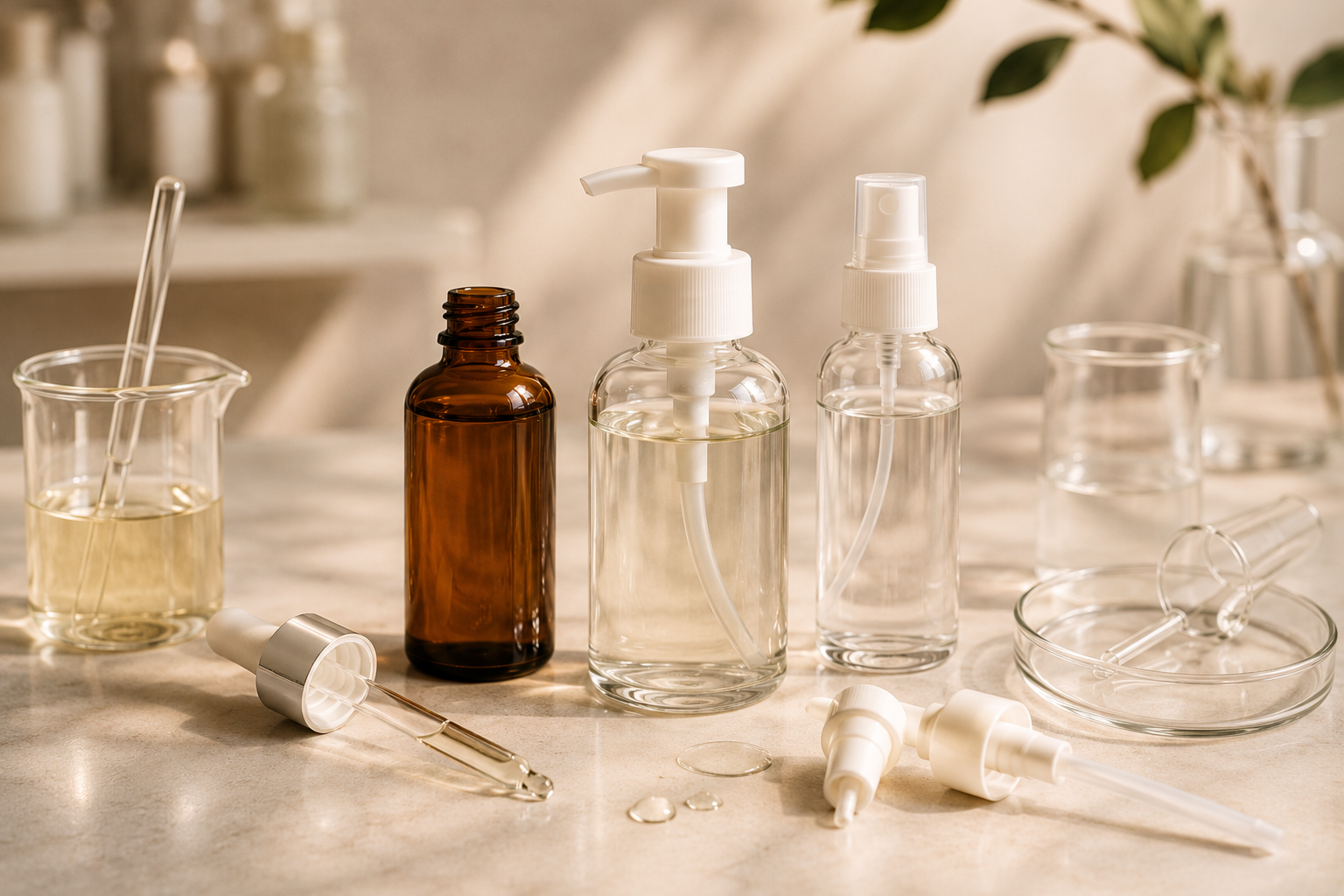
Leakage testing is one of the first checks buyers should perform because it evaluates the assembled package rather than the bottle alone.
A simple inversion test can reveal problems around the closure, gasket or pump interface. More formal methods may use pressure, vacuum or package-integrity techniques depending on the product and risk level.
The important point is consistency.
Do not evaluate one bottle and assume the result represents the production run. Test multiple samples and inspect them over time.
Temperature also matters. A package that remains dry at room temperature may behave differently after exposure to heat or repeated temperature changes.
For this reason, leakage testing is often combined with stability or temperature-cycle testing rather than treated as a one-time check.
5. Pumps, Droppers and Sprayers Need Functional Testing
A closure can screw onto a bottle and still be unsuitable for the formula.
Dispensing systems have their own performance requirements.
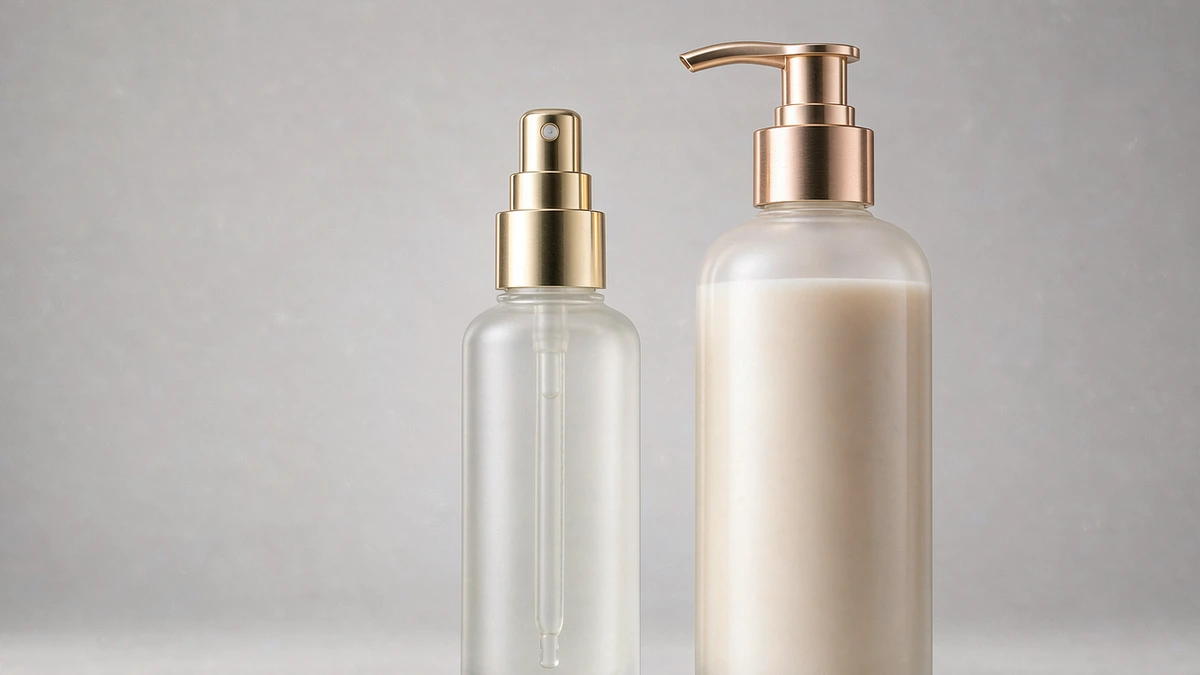
For pumps and sprayers, buyers should evaluate:
- how many actuations are needed before product begins dispensing,
- whether the output remains reasonably consistent,
- whether the spray pattern remains acceptable,
- whether the pump dribbles after use,
- whether the formula clogs the outlet,
- whether the dip tube reaches the correct depth,
- and whether repeated use changes leakage or output.
For droppers, the bulb material and pipette length matter alongside neck and closure fit.
A bulb that performs well with one serum may react differently with an oil- or alcohol-rich formula.
The relationship between bottle, pump, dropper and airless systems is discussed in Dropper Bottle vs Pump Bottle vs Airless Bottle.
Compatibility testing comes after that selection decision.
6. Neck Fit Is Necessary, but It Does Not Prove Compatibility
A correct neck finish is essential.
It is not the final test.
Even when the bottle and closure have the correct dimensional match, buyers still need to evaluate sealing, torque, liner compression and performance with the actual formula.
A closure that can be threaded onto the bottle is not automatically a closure that will remain leak-free during storage and transport.
If you are still working through thread and neck specifications, see Cosmetic Bottle Neck Sizes Explained.
Once the correct bottle-and-closure combination has been identified, compatibility testing should move from dimensions to real-world performance.
7. Temperature Cycling Can Expose Problems Early
Packaging components expand, contract and change mechanically as temperature changes.
That can reveal issues that remain invisible during room-temperature inspection.
Depending on the formula and target market, compatibility programs may include refrigerated conditions, elevated temperatures or repeated cold-to-warm cycling.
There is no single universal temperature-cycle program for every cosmetic product.
Different industry references use different temperatures, cycle counts and durations. The appropriate protocol should therefore reflect the formula, packaging materials, distribution environment and regulatory expectations rather than being copied from a generic checklist.
What matters is observing whether temperature exposure causes:
- leakage,
- deformation,
- seal changes,
- discoloration,
- corrosion,
- formula separation,
- pump failure,
- or other visible deterioration.
8. Accelerated Stability Testing Should Support, Not Replace, Real-Time Evaluation
Accelerated stability testing is commonly used to identify problems sooner by storing the filled package under elevated temperature and humidity.
Industry programs often run accelerated studies for several months, while real-time stability continues for a longer period.
Exact conditions and durations vary.
Guidance used by cosmetic companies and related regulated industries does not support treating one fixed accelerated period as universally correct for every product.
A higher-risk active formula may require a different program from a basic cleanser.
The test plan should be agreed around the actual product, packaging system, intended shelf life and target market.
Official and industry frameworks commonly referenced when developing test programs include ISO guidance for cosmetics, ASTM methods, ISTA transport protocols, USP container-related methods and ICH stability guidance where appropriate.
9. Light Exposure Matters for Sensitive Formulas
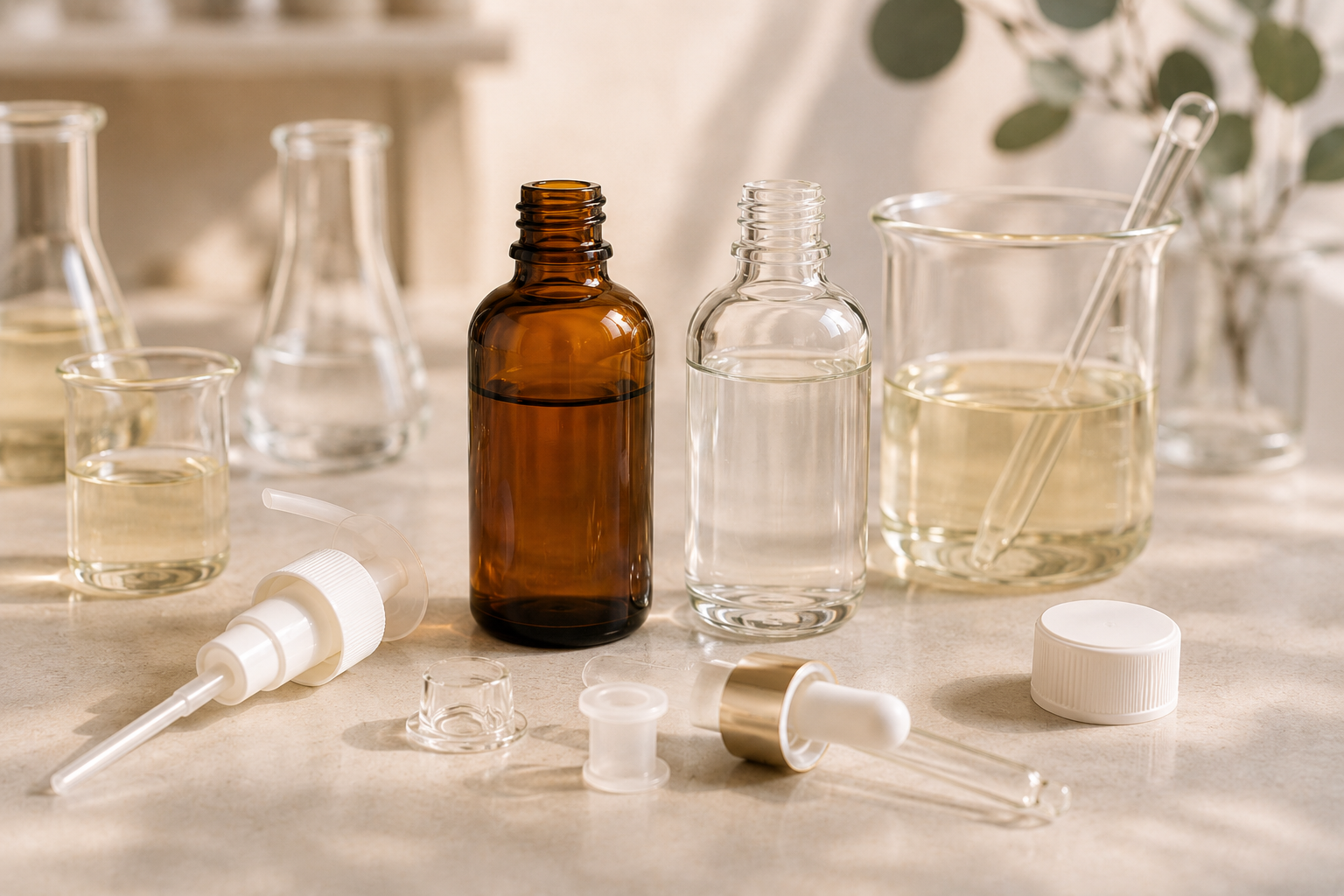
Clear packaging can be visually attractive, but light-sensitive formulas require additional evaluation.
Vitamin C, retinol and certain oils or color-sensitive ingredients can change under light exposure.
Photostability testing helps determine whether the formula needs amber glass, an opaque package, secondary packaging or another protective strategy.
This decision should be based on formula testing rather than appearance alone.
A dark container may improve light protection, but it does not automatically solve oxygen exposure, closure leakage or chemical incompatibility elsewhere in the package.
10. Transport Testing Is Part of Compatibility Testing
A package that performs well on a laboratory bench can still fail during shipping.
Finished cosmetic products may experience vibration, impact, stacking pressure and repeated orientation changes before reaching the customer.
Transport simulation can help reveal:
- closures loosening,
- leakage around pumps,
- damaged glass,
- cracked plastic,
- displaced liners,
- and dispensing failures after vibration.
ISTA and ASTM distribution-testing methods are commonly used as reference frameworks for this type of evaluation.
For cross-border orders, this step becomes especially important because the packaging may remain in transit for days or weeks and experience more than one logistics environment.
11. What to Ask a Packaging Supplier Before Production
Before approving a bottle and closure combination, a buyer should collect enough information to build a realistic test sample.
Useful questions include:
- What is the bottle material?
- What is the complete neck finish?
- Which closures have been designed for that neck?
- What material is used for the gasket or liner?
- What material is used for the spring?
- What dip-tube or pipette length is supplied?
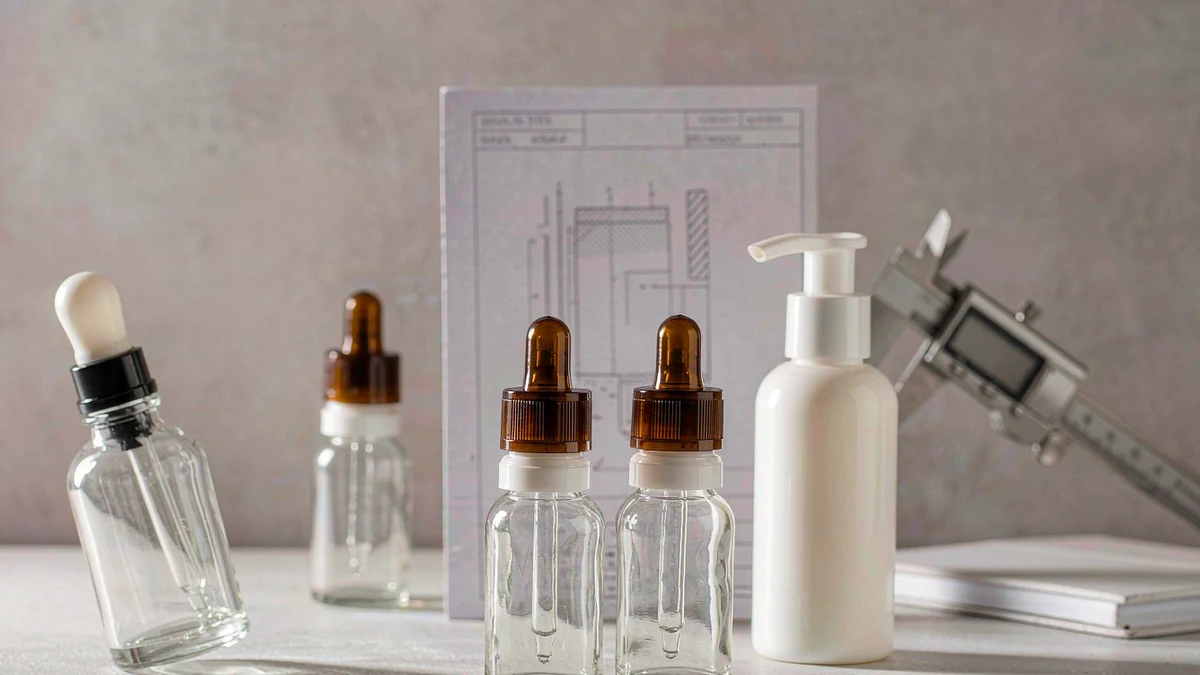
- Is a technical drawing available?
- Are samples available for compatibility testing?
- Is there a recommended application torque for the closure?
- Are material declarations or existing technical reports available?
These questions do not replace testing.
They make the testing more meaningful.
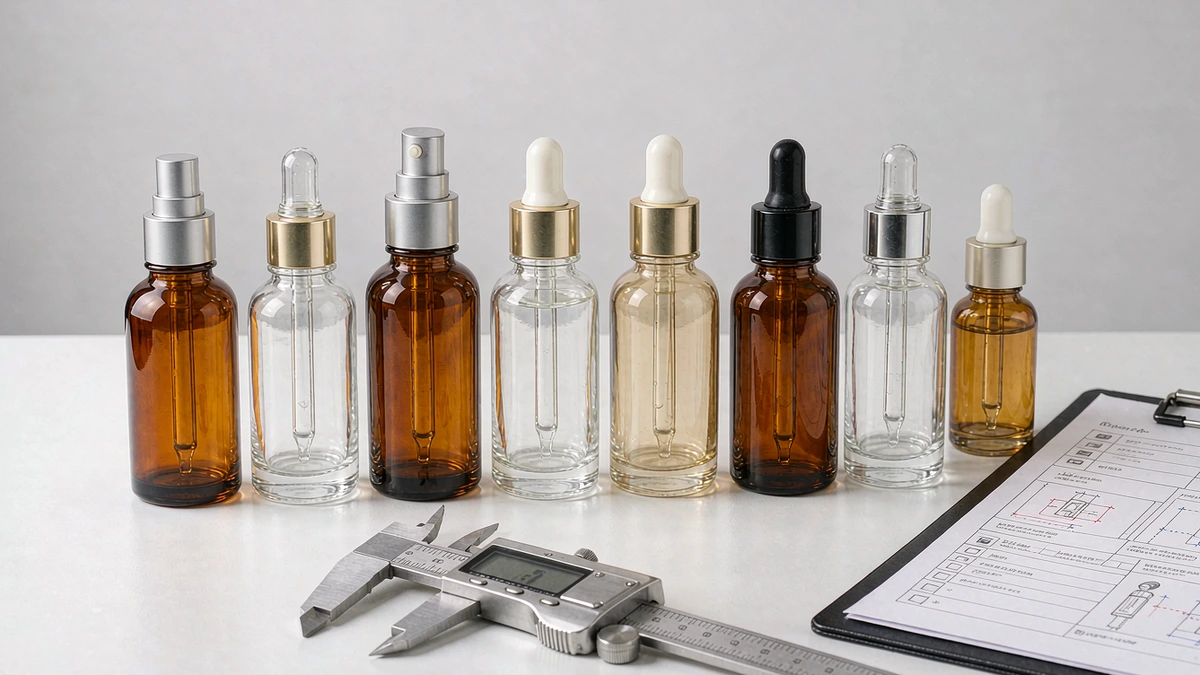
For example, Venturove currently lists an amber square glass bottle range with dropper, pump and spray closure options. A buyer considering more than one closure style should test each final bottle-and-closure configuration with the intended formula rather than assuming that all closure systems will perform identically.
12. A Practical Pre-Production Compatibility Workflow
For most cosmetic packaging projects, the process can be kept straightforward.
First, define the final formula.
Do not build the test program around a temporary water fill if the commercial formula contains alcohol, oils, acids, fragrance or active ingredients.
Second, confirm the packaging specification.
Document the bottle material, neck finish, closure type, liner, gasket, spring and dip-tube or pipette configuration.
Third, obtain representative samples.
The samples should match the intended commercial package as closely as possible.
Fourth, fill them with the final formula.
Record starting weight, appearance and dispensing performance.
Fifth, run the appropriate storage and functional tests.
Depending on risk, this may include inversion, leakage, temperature cycling, accelerated stability, light exposure, pump cycling and transport simulation.
Sixth, inspect the package as a system.
Do not look only for a cracked bottle. Check the liner, gasket, spring, bulb, dip tube, seal and dispensing behavior.
Finally, approve production only after the package and formula have been evaluated together.
Compatibility Testing Is Cheaper Than Discovering the Problem After Filling
Packaging failures are expensive because they often appear late.
By the time a leaking pump, swollen bulb or incompatible liner is discovered in finished inventory, the cost may already include formula, filling, packaging, freight and replacement production.
Compatibility testing moves that risk forward to the sample stage.
That is the point.
The goal is not to prove that a bottle looks acceptable. It is to establish reasonable evidence that the complete packaging system can protect and dispense the intended formula under the conditions it is likely to experience.
Need Help Evaluating Your Packaging Options?
If you are evaluating bottles, pumps, droppers or sprayers for a new cosmetic project, share your bottle size, closure type and formula category with Venturove so the packaging requirements can be discussed before production sampling.
FAQ
What is cosmetic packaging compatibility testing?
Cosmetic packaging compatibility testing evaluates whether the finished formula and the complete packaging system can remain stable and functional together. It looks for problems such as leakage, swelling, corrosion, discoloration, stress cracking, material interaction and dispensing failure.
Why should packaging be tested with the real cosmetic formula?
Water or an empty-container test cannot reproduce the effects of alcohol, essential oils, acids, fragrances, surfactants or active ingredients. The final formula can interact with bottles, liners, gaskets, springs, bulbs and dip tubes in ways that water does not reveal.
What should be tested before cosmetic packaging goes into production?
Typical checks include leakage, inversion, dispensing performance, torque, drop and transport testing, temperature cycling, accelerated stability, light exposure, weight loss and visible signs of material degradation. The exact program depends on the formula, packaging system and market requirements.
How long does cosmetic packaging compatibility testing take?
There is no single universal duration. Industry programs may use several months of accelerated testing together with longer real-time stability studies. The appropriate duration depends on the formula, packaging risk and target market, so one fixed timetable should not be treated as universal.
Does a matching neck size guarantee that a pump or dropper will work?
No. Correct neck dimensions are necessary, but they do not prove sealing, torque retention, formula compatibility or dispensing performance. The complete bottle-and-closure system still needs to be tested with the final formula.
Should pumps, droppers and sprayers be tested separately?
Yes. Different dispensing systems have different components and failure modes. Priming, output, clogging, dip-tube or pipette length, bulb material, gasket compatibility and leakage after repeated use may all need to be evaluated separately.
What information should a buyer request from a packaging supplier before testing?
Useful information includes bottle material, complete neck finish, compatible closures, gasket or liner material, spring material, dip-tube length, technical drawings, sample availability and any relevant material documentation. These details help build a meaningful test plan but do not replace real compatibility testing.