
Child-Resistant (CRC) Caps for Skincare & CBD Topicals: A Compliance Checklist

Child-resistant caps show up on everything from aspirin bottles to CBD tinctures, but the label does a lot of quiet work. For a skincare or wellness brand, ‘CRC’ can mean a hard legal requirement, a responsible-branding choice, or simply a closure that looks secure — and those three are not the same thing. This guide separates the mechanism from the mandate, so you can specify the right cap and ask your supplier the right questions.
Key Takeaways
If you remember nothing else, remember these six points:
- ‘Child-resistant’ slows children, it doesn’t stop them. The term describes risk reduction under test conditions, not a guaranteed child-proof seal.
- The U.S. legal baseline is 16 CFR 1700 (the PPPA); the international benchmarks are ISO 8317 for reclosable packs and EN 14375 for non-reclosable pharma packs.
- Mandatory CRC applies only to substances listed in 16 CFR § 1700.14. Ordinary skincare isn’t automatically covered, so confirm applicability per product and per market.
- Three mechanisms dominate the category: push-and-turn, squeeze-and-turn, and safe-snap — each suited to different bottle shapes and viscosities.
- A CRC cap only performs if it matches the bottle neck finish. Wrong thread means a failed seal and a failed test.
- Ask for the test protocol and classification, not just a ‘CR’ stamp. Documentation, not the marking, is what survives a compliance review.
What ‘Child-Resistant’ Actually Means
A child-resistant closure is engineered so that a young child (the test panel is 42-51 months old) cannot open it within a defined time window, while a typical adult still can. Under the U.S. Poison Prevention Packaging Act, ‘special packaging’ must keep at least 85% of children out in the first five minutes without a demonstration, and at least 80% out across a full ten-minute test after they’ve been shown how. On the adult side, at least 90% of senior users (aged 50-70) must open and correctly reclose the pack.
The point worth absorbing: the standard is statistical, not absolute. A CRC cap is a speed bump for a curious toddler, not a vault. That distinction matters when a sales page or a regulatory reviewer reads the word ‘child-resistant’ — it implies tested performance, not an unbreakable promise.
The Standards That Define Compliance
If you only remember three references, make them these:
- 16 CFR 1700 (United States). The Poison Prevention Packaging Act, administered by the CPSC, sets the federal floor. The test method lives in § 1700.20; the effectiveness thresholds in § 1700.15; the list of covered substances in § 1700.14.
- ISO 8317:2016 (international, reclosable). The most common benchmark outside the U.S. — accepted across the EU, Canada, Australia, and much of Asia for packaging you open and close repeatedly.
- EN 14375:2016 (EU, non-reclosable pharma). Covers blister and stick-pack style units. For non-drug household goods, EN 862 plays the equivalent role.
The test panels behind these standards are similar: up to 200 children aged 42-51 months, and 100 adults aged 50-70, with the same broad pass/fail ratios. When a supplier says a cap ‘meets ISO 8317,’ ask which version and which accredited lab ran the panel — the standard is only as good as the evidence attached to it.
When CRC Packaging Is Legally Required
This is where skincare and CBD brands need to slow down. The PPPA mandates child-resistant packaging only for substances named in 16 CFR § 1700.14 — things like certain OTC and prescription drugs, and specific hazardous household chemicals. A ‘cosmetic’ or ‘skincare’ product sits inside the Act’s definition of a household substance, but that does not by itself trigger the CRC requirement.
For CBD and cannabis-derived topicals, the picture is genuinely fragmented. Ingestible and topical products are treated differently, state-level rules layer on top of federal ones, and the regulatory status of CBD itself is still unsettled at the FDA level. Some markets and retail channels do require child-resistant closures for these products regardless of federal ambiguity.
The safe posture: treat CRC as mandatory where a product is classified as a regulated substance or where a market explicitly requires it, and treat it as a deliberate safety feature everywhere else. Confirm the classification with regulatory counsel or the relevant authority before you print ‘compliant’ on a label. A visible squeeze-and-turn cap proves the mechanism exists; it does not prove the package cleared the test in your market.
Common CRC Closure Mechanisms
Three designs account for most of what brands actually specify:
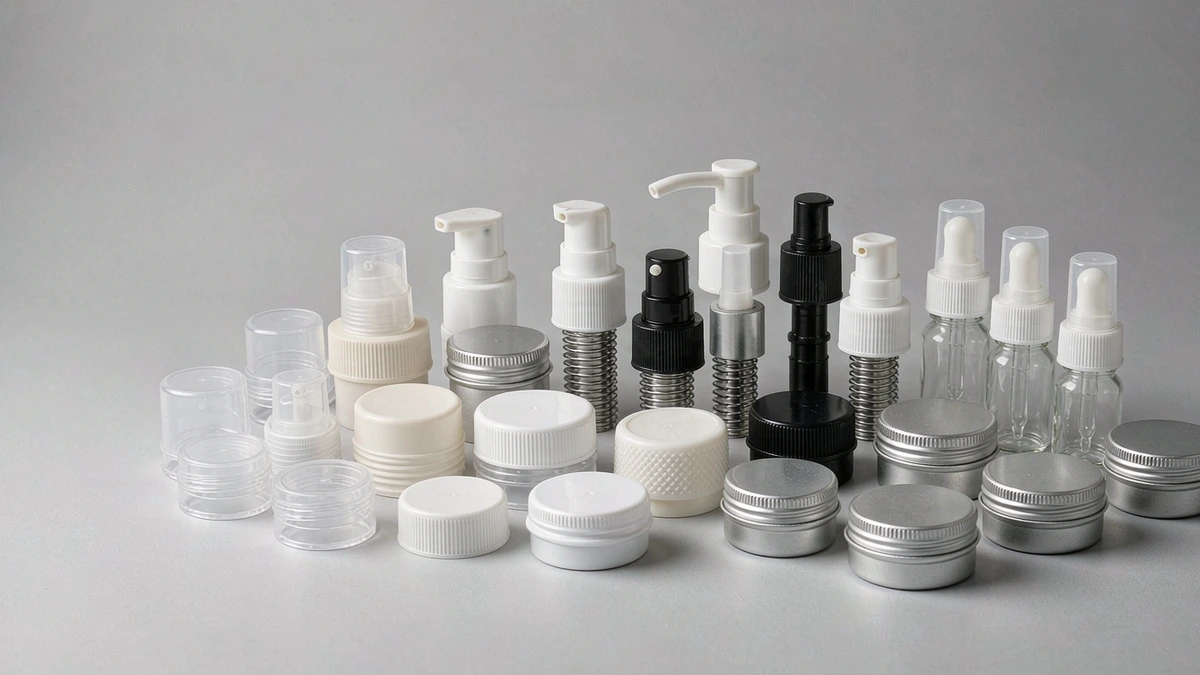
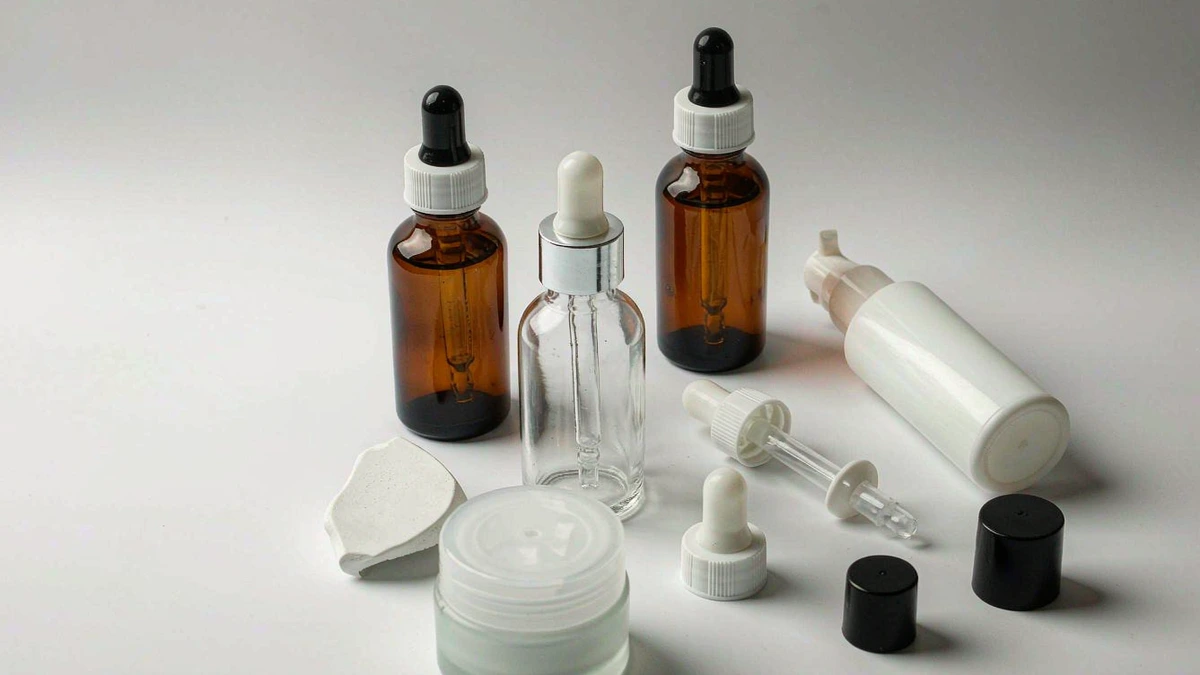
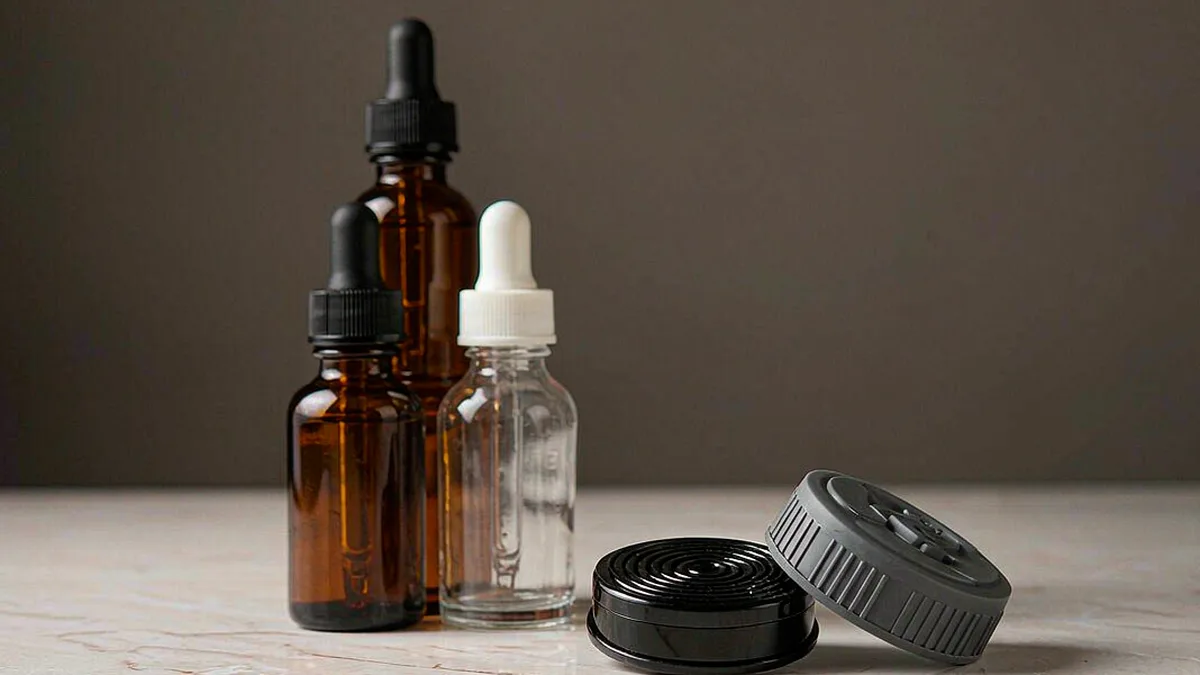
- Push-and-turn. Press the cap down while rotating it. The workhorse of the category — used on both plastic and glass, often with a tamper-evident band, and available as a dropper cap for tinctures and essential oils.
- Squeeze-and-turn. Pinch two flexible sides to release the internal lugs, then twist. Better suited to wider-diameter bottles where a plain screw cap would be too intuitive for small hands.
- Safe-snap. No rotation at all; align a tab to an arrow and lift. Classified under ASTM Type III, handy for frequent-access formats.
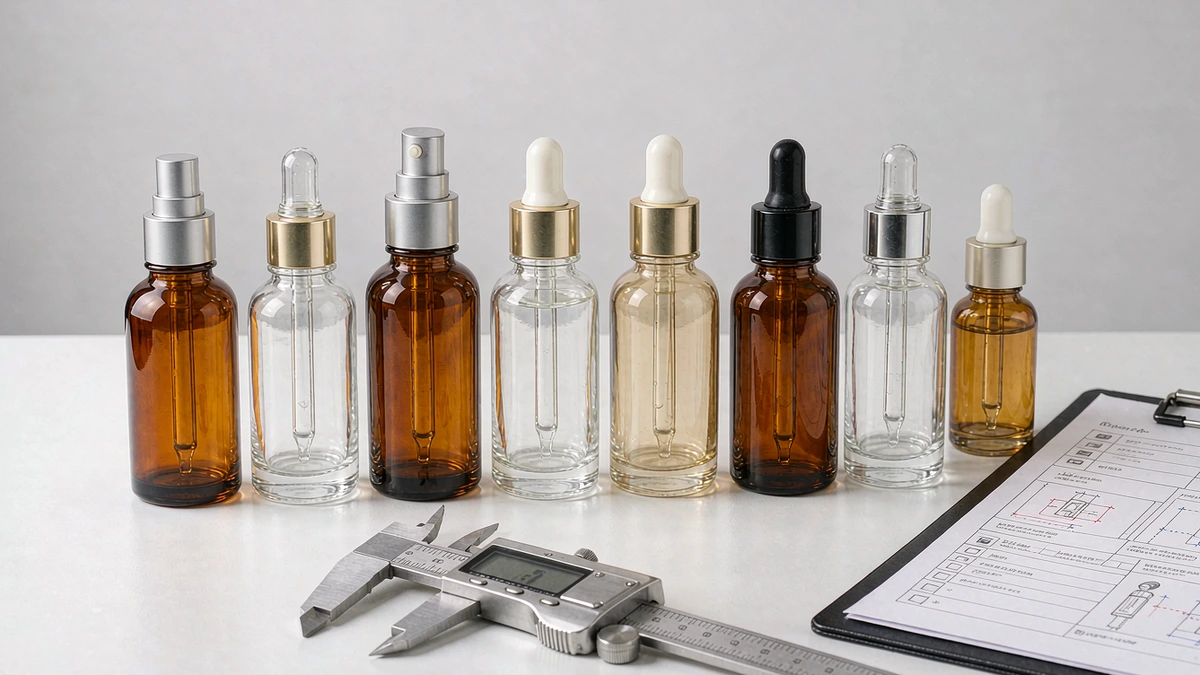
For liquid lines, CRC dropper caps (push-and-turn with a pipette) are the standard for precise-dose products, and CRC airless pumps are an emerging option for high-value serums and topicals where formula preservation matters. Each mechanism behaves differently on the line and in the hand, so match it to your viscosity and your user, not just to the catalog photo.
Matching CRC Caps to Your Bottle Neck Finish
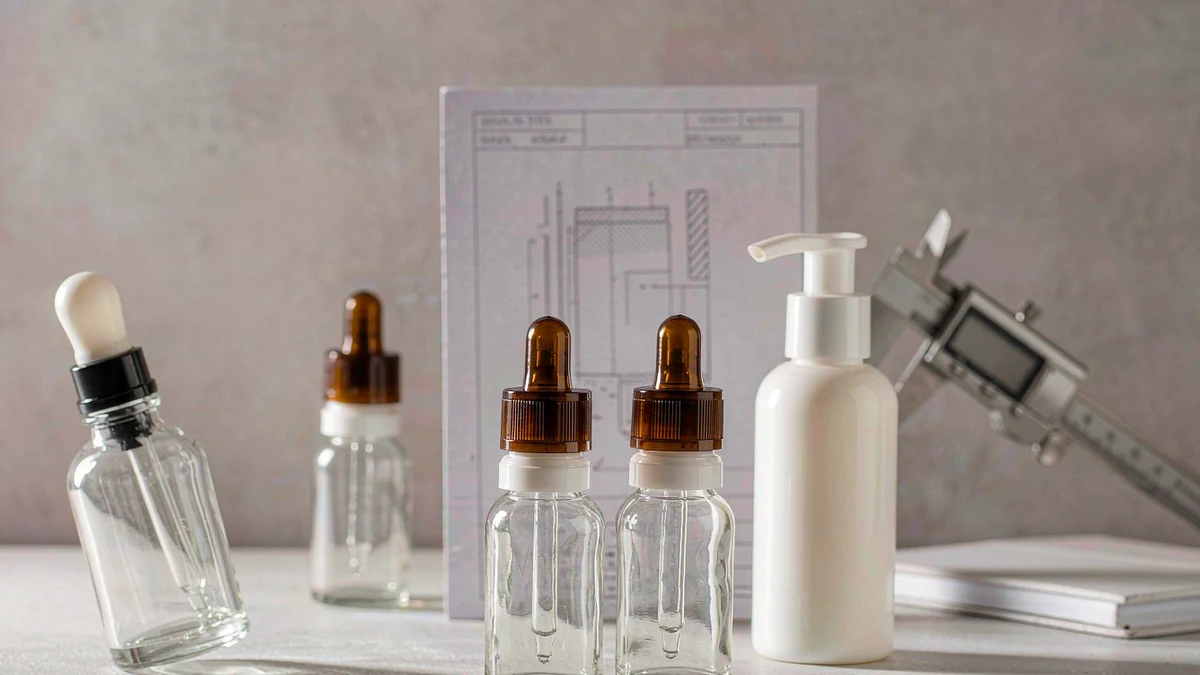
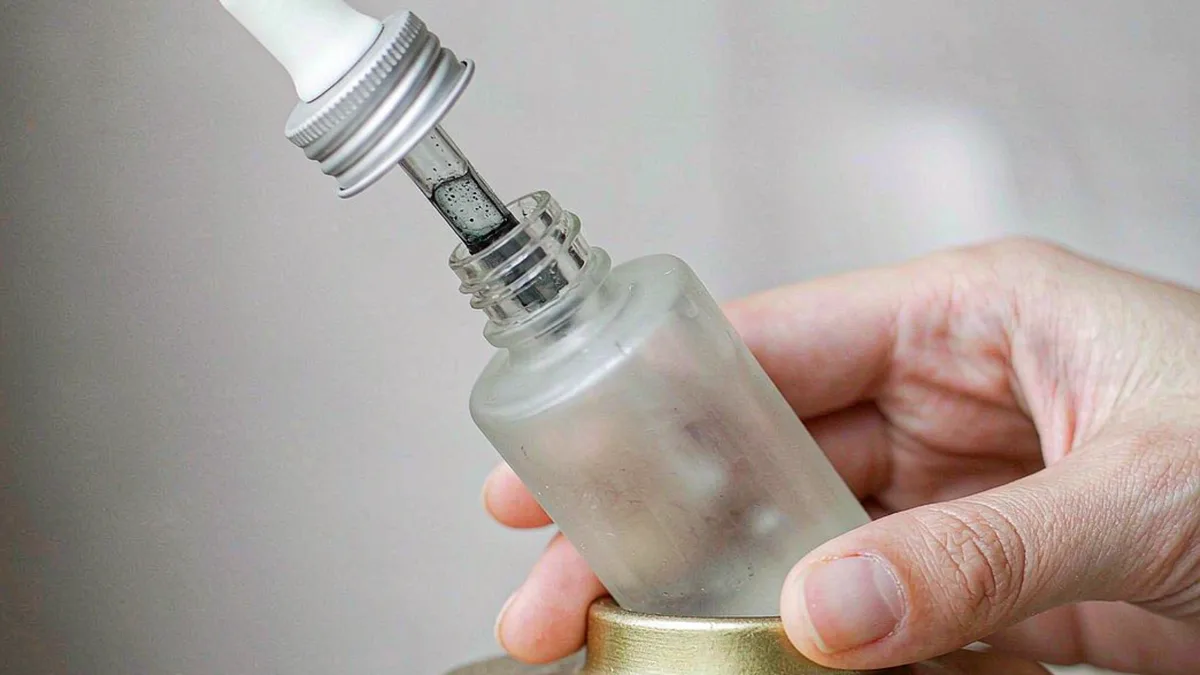
A CRC cap is only as good as its thread. The closure must physically mate with the bottle’s neck finish — 20-400, 24-410, 28-410, and similar designations — or the seal and the lock both fail. Neck-finish tolerance at the level of a tenth of a millimeter can shift removal torque enough to change a test outcome, which is why spec-ing the cap and the bottle together, rather than separately, pays off.
If you’re still choosing a bottle, the neck dimension drives almost everything downstream: which caps fit, which droppers seat, and which pumps you can source. Our guides to cosmetic bottle neck sizes and matching neck finish to cap, pump, or dropper walk through the common finishes and where they’re used. For dropper-led lines specifically, the comparison of dropper vs pump vs airless bottles and the dropper bottle size guide cover the formats CRC closures most often sit on.
Specifying CRC Caps from a Supplier
When you request quotes, move past ‘do you have child-resistant caps’ and into the details that survive an audit:
- Neck finish. State the exact thread (e.g., 24/410) so the sample actually fits your bottle.
- Mechanism. Push-and-turn, squeeze-and-turn, safe-snap, CRC dropper, or CRC pump — each changes the user experience.
- Evidence. Ask for the test standard (16 CFR 1700.20, ISO 8317, EN 14375) and the ASTM D3475 classification, plus the lab name, date, and protocol version.
- Materials. HDPE or PP shell with a silicone or LDPE liner is typical; pair with amber or cobalt glass when UV protection is part of the formula’s stability plan.
- Tamper evidence. Decide whether a tamper-evident band is required alongside the CRC function.
- Reclose life. Confirm the cap holds its resistance across the open-close cycles your product will actually see.
A ‘CR’ mark on a cap is a claim; the test report is the proof. Keep the documentation in your files before you rely on the closure in a regulated market.
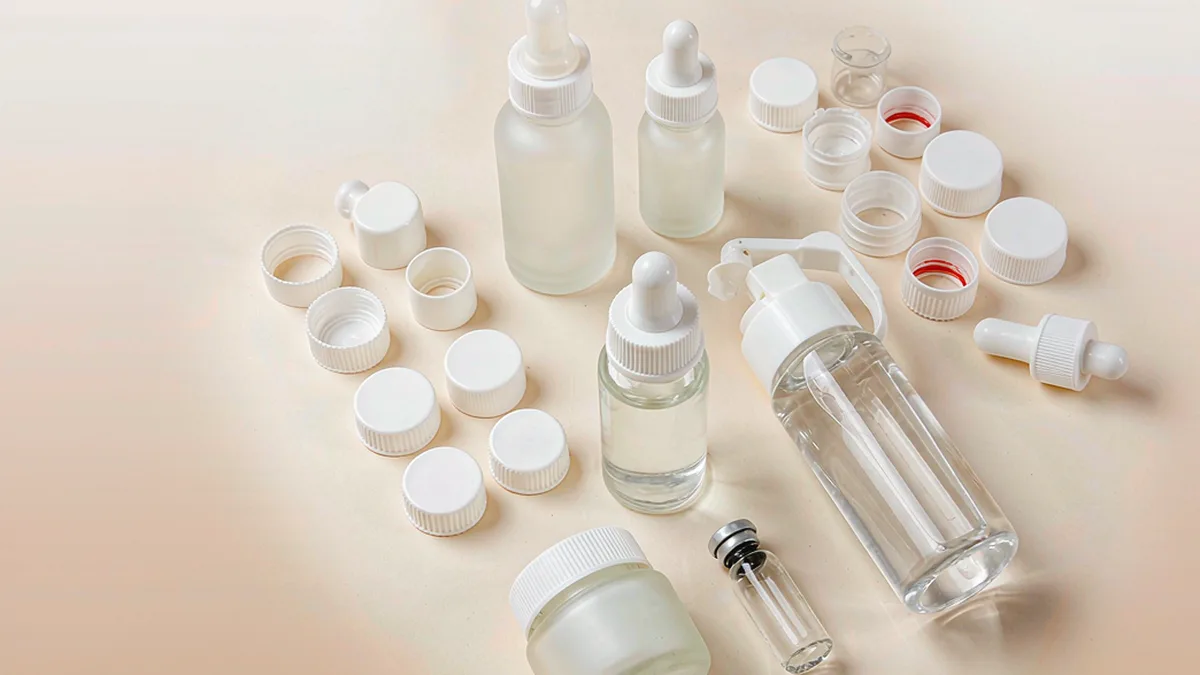
Specifying Child-Resistant Closures for Your Line?
Tell us your bottle neck finish and target market — we’ll help you shortlist closure mechanisms and the test evidence to match.
FAQ
Are child-resistant caps required for all skincare products?
No. In the U.S., mandatory CRC packaging applies only to substances listed in 16 CFR § 1700.14. Standard cosmetics and many topicals are not automatically covered, though specific markets, channels, or product classifications (such as certain CBD items) may require it. Verify per product and per market.
What is the difference between ISO 8317 and EN 14375?
ISO 8317 covers reclosable child-resistant packaging (bottles, jars, tubes you open repeatedly). EN 14375 covers non-reclosable pharma packaging such as blister and stick packs. Both use similar child and adult test panels.
Can a CRC cap fit any bottle?
No. The cap must match the bottle’s neck finish (thread size and style, e.g., 20/400 or 24/410). A mismatched cap fails to seal and will not pass a CRC test. Choose cap and bottle together.
Is ‘child-resistant’ the same as ‘child-proof’?
No. Child-resistant means children are significantly delayed from opening the package under test conditions; it is not a guarantee that a determined or older child cannot open it. Safe storage remains the brand’s and the caregiver’s responsibility.
Do CRC dropper caps exist for tinctures and essential oils?
Yes. Push-and-turn CRC dropper caps are common for precise-dose liquids such as CBD tinctures, herbal extracts, and essential oils, and they are frequently supplied with a tamper-evident band.
What should I ask a supplier besides ‘do you have CRC caps’?
Ask for the exact neck finish, the mechanism type, the test standard and ASTM D3475 classification, the accrediting lab and test date, liner material, and reclose-life rating. The documentation, not the label, is what demonstrates compliance.